 1 / 10
Vintage Shorter Gardener Toby Jug — Hand-Painted Staffordshire Standing Figure with Spade
Price in USD. Shipping is $10.95 to the contiguous US — see our Shipping Policy.
Highlights
- Maker: Shorter, Stoke-on-Trent, Staffordshire, England
- Pattern: Gardener / Countryman with Spade
- Era: Circa 1930s–1950s (company operated 1872–1964)
- Material: Hand-painted glazed earthenware
- Size: Small/miniature standing Toby jug
- Mark: Impressed "SHORTER" on base with hand-painted "2"
Condition
Good vintage condition with notable crazing — a network of fine cracks across the glaze surface, most visible on the base and lighter-colored areas. This is common in earthenware of this age and does not affect structural integrity. No chips, cracks, or breaks. The hand-painted decoration is intact with vivid, unfaded colors. A well-loved piece with honest signs of its seven-plus decades.Vintage Shorter Gardener Toby Jug — Hand-Painted Staffordshire Standing Figure with Spade
Circa 1930s–1950s
English Staffordshire Toby Jug — Novelty Earthenware
Here's a standing English countryman with a spade in hand, his wide-brimmed hat forming the spout, a teal waistcoat over yellow breeches. The base carries an impressed "SHORTER" mark — Shorter & Son of Stoke-on-Trent, Staffordshire, founded around 1872 by Arthur Shorter. This one dates to somewhere in the 1930s through 1950s. A nice footnote: a young Clarice Cliff worked at Shorter as a decorator from 1916, before she went on to become one of the great names in twentieth-century ceramic design. Everyone starts somewhere.
Condition is good, with honest crazing across the glaze — the fine network of lines earthenware develops at this age. It's cosmetic, not structural. He's sound and steady on his feet.
He's part of a collection a woman in Durham, North Carolina, built over a lifetime; she was 91 when her estate came to us. She'd moved south from the Philadelphia area, and her character jugs traveled and lived together as a set of sorts — this gardener among them. She was selective about where her things went, handing them on to people she trusted. We'd like to send him off to a gardener at heart, or anyone who appreciates a good honest face.
Specifications
- Dimensions
- 6 × 6 × 4 in
- Weight
- 1 lbs
- SKU
- HDRK-VR-0013
A Little Gardener with a Lot of Character
Toby jugs have been a proud tradition of English pottery since the 18th century — part sculpture, part drinking vessel, part shelf decoration, and entirely charming. This particular fellow is a gardener, one of the most endearing character types in the Shorter pottery repertoire. He stands ready for a day in the garden with his spade, dressed in the practical uniform of the English countryman: a brown wide-brimmed hat (which doubles as the jug's pouring lip), a teal waistcoat layered over a brown coat, cheerful yellow breeches, and sturdy black boots. There's a solidity and good humor about him that makes you smile. He was made by Shorter at their pottery works in Stoke-on-Trent, the heart of England's ceramic country. Founded around 1872 by Arthur Shorter, the firm became known for ornamental and novelty earthenware beginning in the 1920s — and their Toby jugs, produced from 1917 through the company's closure in 1964, became some of their most collected pieces. A young Clarice Cliff worked at Shorter's as a decorator starting in 1916, and the company later produced some of her most celebrated designs. The firm was formally incorporated as Shorter & Son Ltd in 1933, and different eras of production carry different backstamps.About the Mark
This piece carries an impressed "SHORTER" mark on the base — notably without "& Son," or "Ltd." Shorter's marking practices were inconsistent across their long production history, but the simplest impressed marks are generally associated with earlier production. Since Toby jug production began around 1917, this piece likely dates from the 1920s through the 1950s. The hand-painted "2" on the base is probably a mould number or decorator's mark — a common practice in Staffordshire potteries where individual painters identified their work.Details
- Maker: Shorter, Stoke-on-Trent, Staffordshire, England
- Pattern: Gardener / Countryman — standing figure with spade
- Era: Circa 1930s–1950s
- Material: Hand-painted glazed earthenware
- Size: Small/miniature standing Toby jug
- Mark: Impressed "SHORTER" on base with hand-painted "2"
- Colors: Brown hat and coat, teal/blue waistcoat, yellow breeches, black boots and handle, cream/flesh tones
- Form: Standing Toby jug — open hat forms pouring lip, black handle at rear
Condition
Good vintage condition with one important note: this piece shows significant crazing across the glaze — a network of fine cracks that is clearly visible, particularly on the base and lighter-colored areas. Crazing is extremely common in earthenware of this age. It occurs when the glaze and the clay body expand and contract at slightly different rates over decades, and it does not affect the structural integrity of the piece. Think of it as the ceramic equivalent of a well-worn patina. Beyond the crazing, this jug is in solid shape. No chips, cracks, or breaks. The hand-painted decoration is intact and the colors remain vivid — the teal waistcoat, the yellow breeches, the rosy face all still pop. A lovely piece for a Toby jug collector, a Staffordshire pottery enthusiast, or anyone who appreciates a bit of English character on their shelf. Priced to reflect the crazing honestly.Related products
-
 Very Good
Mid-Century (1940s–1960s)
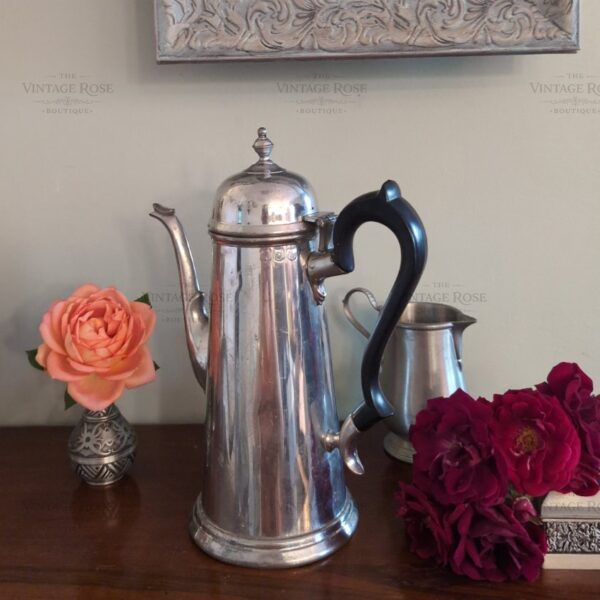
Towle Pewter Coffee Pot, Made in England — Lighthouse Form with Acorn Finial
$44.00Pewter
HDRK-VR-0026 -
Excellent
Retro (1970s–1990s)
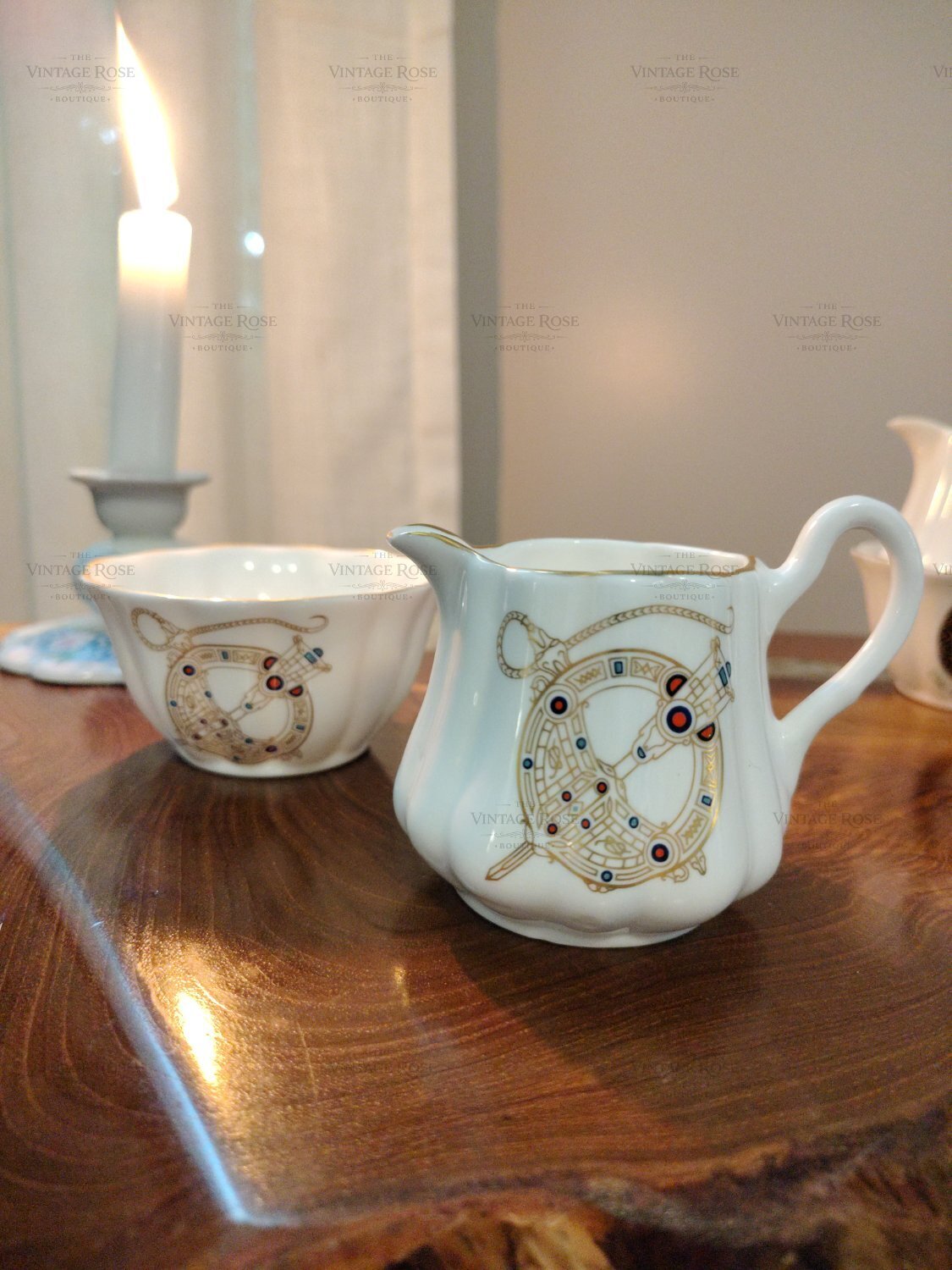
Royal Tara Irish Bone China Tara Brooch Sugar Bowl & Creamer Set — Handmade in Galway
$38.00Bone China, Enamel / Painted, Gilt
HDRH-VR-0025 -
Very Good
Retro (1960s–1980s)
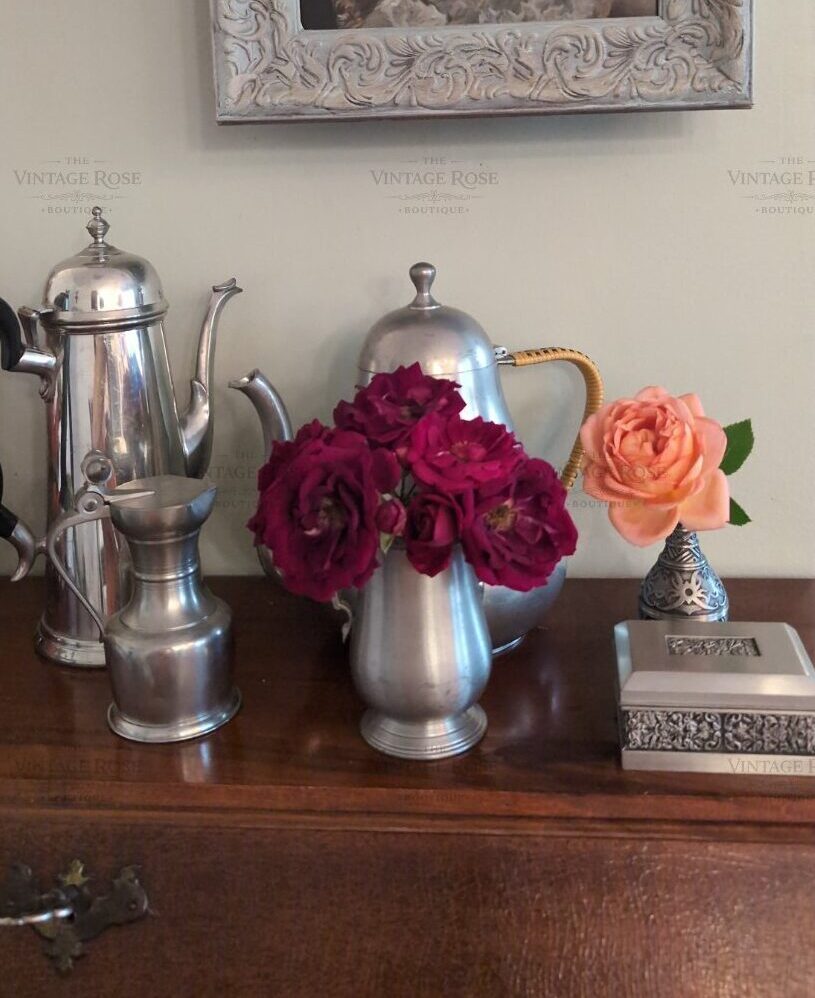
Wallace Pewter Handmade Cream Jug, Sheffield England, c. 1960s–1980s
$34.00Pewter
HDRK-VR-0024 -
Very Good
1980s
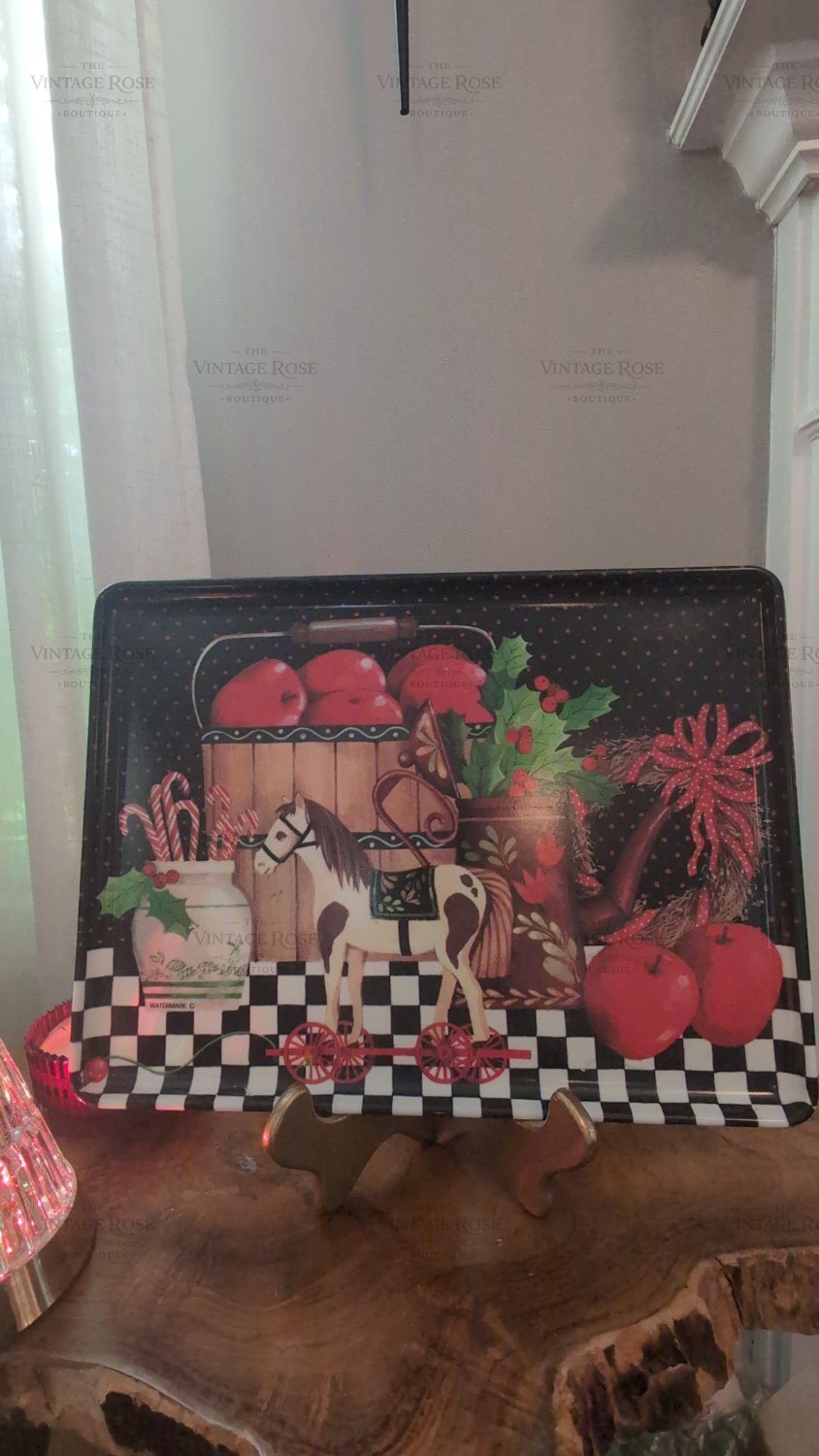
Keller Charles Country Christmas Tray — Vintage Folk-Art Holiday Serving Tray, Made in Italy
$28.00Plastic
HOXM-VR-0017