 1 / 10
Vintage Staffordshire Toby Philpots Jug — Hand-Painted Seated Gentleman with Tricorn Hat
Price in USD. Shipping is $10.95 to the contiguous US — see our Shipping Policy.
Highlights
- Origin: Staffordshire, England (attributed — see note below)
- Pattern: Traditional Toby Philpots — the classic seated drinking figure
- Era: Mid-20th century, likely 1940s–1960s
- Material: Hand-painted glazed earthenware
- Size: Small Toby jug
- Mark: Cursive "handpainted" with number or decorator's initials on base — no maker's name present
A Note on Attribution
The previous owner believed this piece to be by Shorter & Son of Stoke-on-Trent. While the style and quality are consistent with Shorter's Toby jug production, the base mark does not match any known Shorter mark — it reads "handpainted" in cursive script with what appears to be a number or decorator's initials, but carries no factory name, "England" marking, or impressed stamp. We're listing this honestly as a Staffordshire-style Toby jug of uncertain manufacture. It may well be Shorter, but we cannot confirm it from the mark alone.Condition
Please check listing photos carefully for detailed condition. This is a vintage piece with decades of life behind it. Any flaws visible in the photographs are part of the piece's history and have been factored into the price.Vintage Staffordshire Toby Philpots Jug — Hand-Painted Seated Gentleman with Tricorn Hat
Mid-20th Century (circa 1940s–1960s)
English Staffordshire Toby Philpots Jug
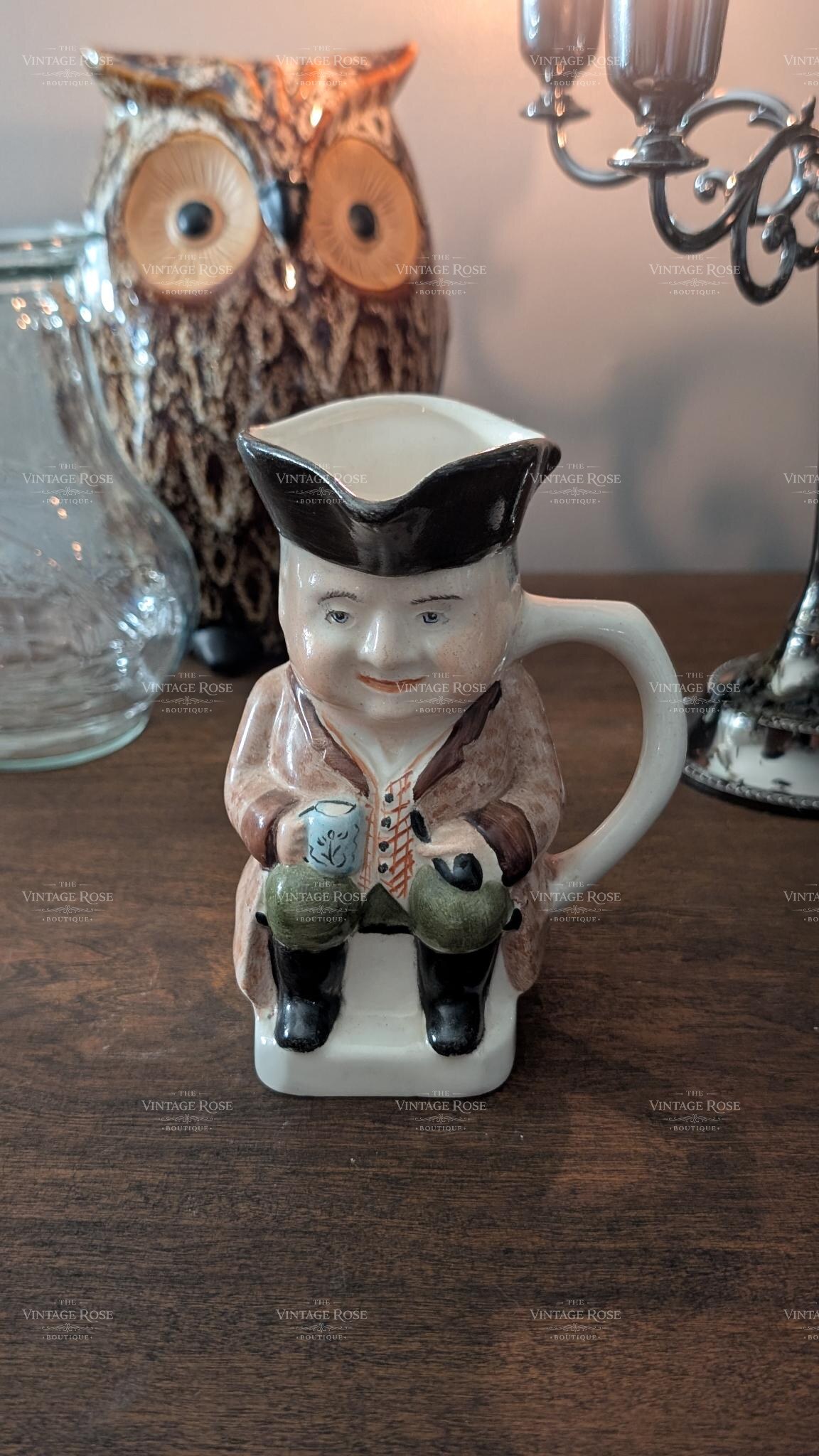
This is the classic original Toby form — a seated Georgian gentleman, tricorn hat forming the spout, a tankard of ale in hand and a pipe at the ready, with a Chippendale-style chair-back handle and a soft, creamy palette. It's a shape Staffordshire potters have been turning out since the 1760s, named for an 18th-century drinker who apparently earned the tribute. Mid-twentieth-century work, here.
A note on the maker, and it's a human one. The woman who owned it believed it was Shorter & Son of Stoke-on-Trent, and we'd love to confirm her. But the base mark — a cursive "handpainted" with a number, no factory name — doesn't match any Shorter mark we know. So we list it honestly as a Staffordshire-style Toby of uncertain maker. It may be Shorter. It may not. She thought so, and that counts for something.
She was a Durham, North Carolina collector, 91 when she passed, with Philadelphia-area roots and a lifetime of careful gathering behind her. This Toby sat among her character jugs. She placed her pieces thoughtfully when she let them go, and we'll do the same. He's good company, and he's looking for some.
Specifications
- Dimensions
- 6 × 6 × 4 in
- Weight
- 1 lbs
- SKU
- HDRK-VR-0015
The Original Toby
Before there were Beefeaters and Gardeners and Long John Silvers, there was Toby Philpots — the jovial, slightly tipsy 18th-century gentleman who gave his name to an entire tradition of English character jugs. The story goes that "Toby Fillpot" (or Philpot) was inspired by a real Yorkshire drinker named Henry Elwes, immortalized in a popular drinking song called "The Brown Jug." When Staffordshire potters began translating him into ceramic form in the 1760s, they created one of England's most enduring decorative traditions — one that's been in continuous production for over 250 years. This is that figure, in his most traditional form: a stout, rosy-cheeked gentleman seated in a chair, tricorn hat on his head (forming the jug's pouring lip), tankard of ale in one hand, clay pipe in the other. He's dressed in the Georgian style — brown coat, red-and-orange striped waistcoat, green knee breeches, black boots — and he looks thoroughly content with his lot in life.The Details
What sets this particular Toby apart from many mid-century examples is its palette. Where most Staffordshire Tobys lean toward saturated, heavy colors on a buff or tan body, this one has a distinctly lighter, creamier base with softer tones that give it an almost porcelain-like quality. The brown coat is warm rather than dark, the green breeches are a true leaf green, and the red-orange stripes on the waistcoat add a dash of personality without overwhelming the composition. The back of the piece is nicely finished — you can clearly see the Chippendale-style chair back painted in black, with the white/cream handle rising from behind the figure. The small tankard he holds features a charming blue floral design, a detail that rewards close looking. The square white base is clean and well-formed. Every element is hand-painted, with the slight variations in brushwork that distinguish handcraft from mechanical reproduction. This is the kind of piece that was decorated by a real person at a real pottery bench, one brushstroke at a time.About the Mark — An Honest Assessment
The base of this jug reads "handpainted" in cursive script, followed by what appears to be "by" and a number or decorator's initials (possibly "3"). There is no factory name, no "England" or "Staffordshire" marking, no impressed stamp. The previous owner attributed this piece to Shorter & Son Ltd of Stoke-on-Trent, one of Staffordshire's best-known Toby jug producers (in operation from the 1870s through 1964). The style, form, and quality are certainly consistent with Shorter's work — they produced traditional Toby Philpots jugs throughout their production history, and several other Shorter pieces in our collection share similar hand-painting techniques. However, Shorter's known marks include printed stamps reading "Genuine Staffordshire Hand Painted / Shorter & Son Ltd / England," impressed "SHORTER / ENGLAND" marks, and the hand-painted phrase "Handpainted by Shorter & Son Staffordshire England" — all of which include the Shorter name. This piece's mark does not. It could be an earlier or less formally marked Shorter piece, or it could be by another Staffordshire pottery — Wood & Sons, Tony Wood, or any number of smaller makers who produced similar traditional Toby forms during the mid-20th century. We believe in honest attribution. This is a well-made, hand-painted Staffordshire-style Toby jug. It may be Shorter. It may not. Either way, it's a lovely example of the traditional Toby Philpots form, and we've priced it for what it demonstrably is rather than what it might be.Details
- Origin: Staffordshire, England (attributed — maker unconfirmed)
- Pattern: Traditional Toby Philpots — seated gentleman with tricorn hat, tankard, and pipe
- Era: Mid-20th century, likely 1940s–1960s
- Material: Hand-painted glazed earthenware
- Size: Small Toby jug
- Base Mark: Cursive "handpainted" with number or decorator's initials — no maker identification
- Colors: Brown coat, red-orange striped waistcoat, green breeches, black tricorn hat and boots, cream/white body, blue floral tankard detail
- Form: Seated Toby jug — tricorn hat forms spout, Chippendale-style chair back forms handle, square base
Condition
Please examine all listing photos carefully for detailed condition assessment. This is a vintage piece with decades of history. Any visible wear, marks, or imperfections shown in the photographs are part of the piece's character and have been reflected in the pricing. We encourage buyers to review all images and reach out with any questions before purchasing.Related products
-
 Very Good
1970s
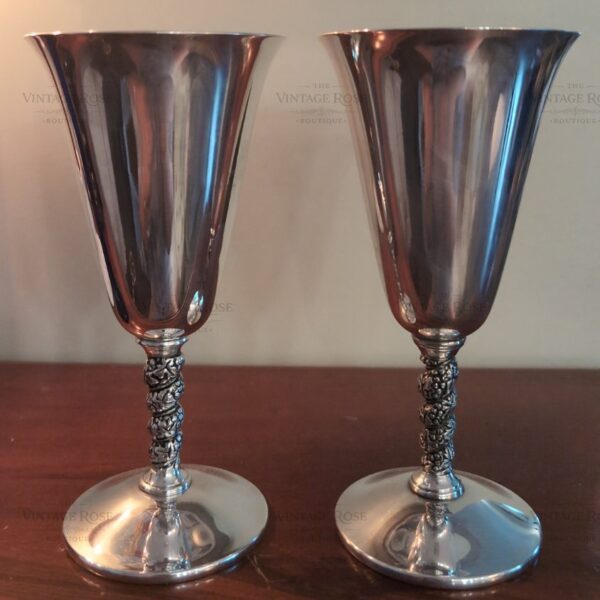
Vintage Spanish Silverplate Grapevine Goblets, Pair — Sculpted EPB Stems, Made in Spain
$40.00Brass / Copper, Silverplate
HDRK-VR-0022 -
Excellent
1990s
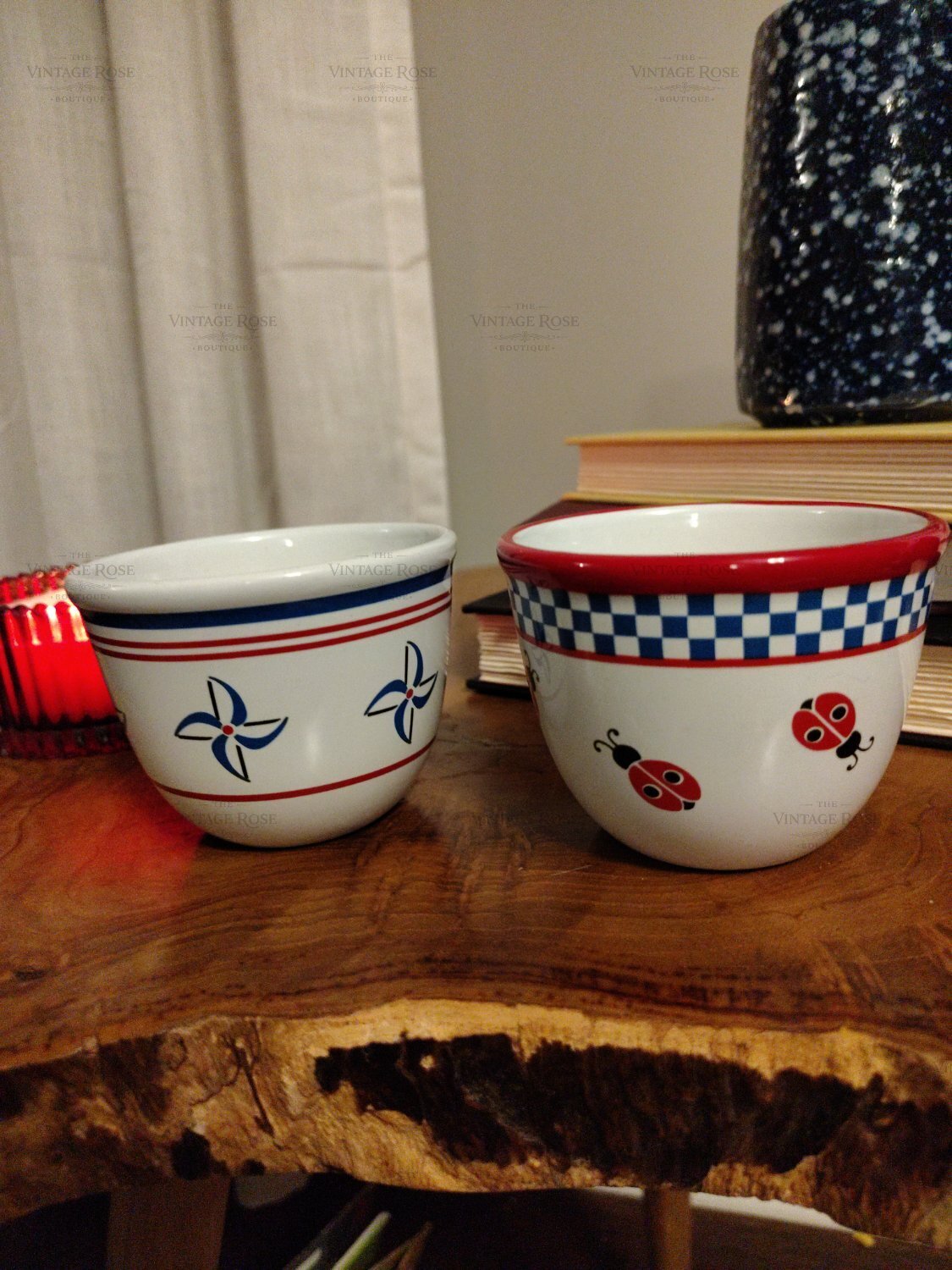
Princess House Custard Cups — Pair of Americana Ladybug & Pinwheel Ceramic Dessert Cups
$22.00Porcelain / Ceramic
HDRK-VR-0038 -
Very Good
1990s
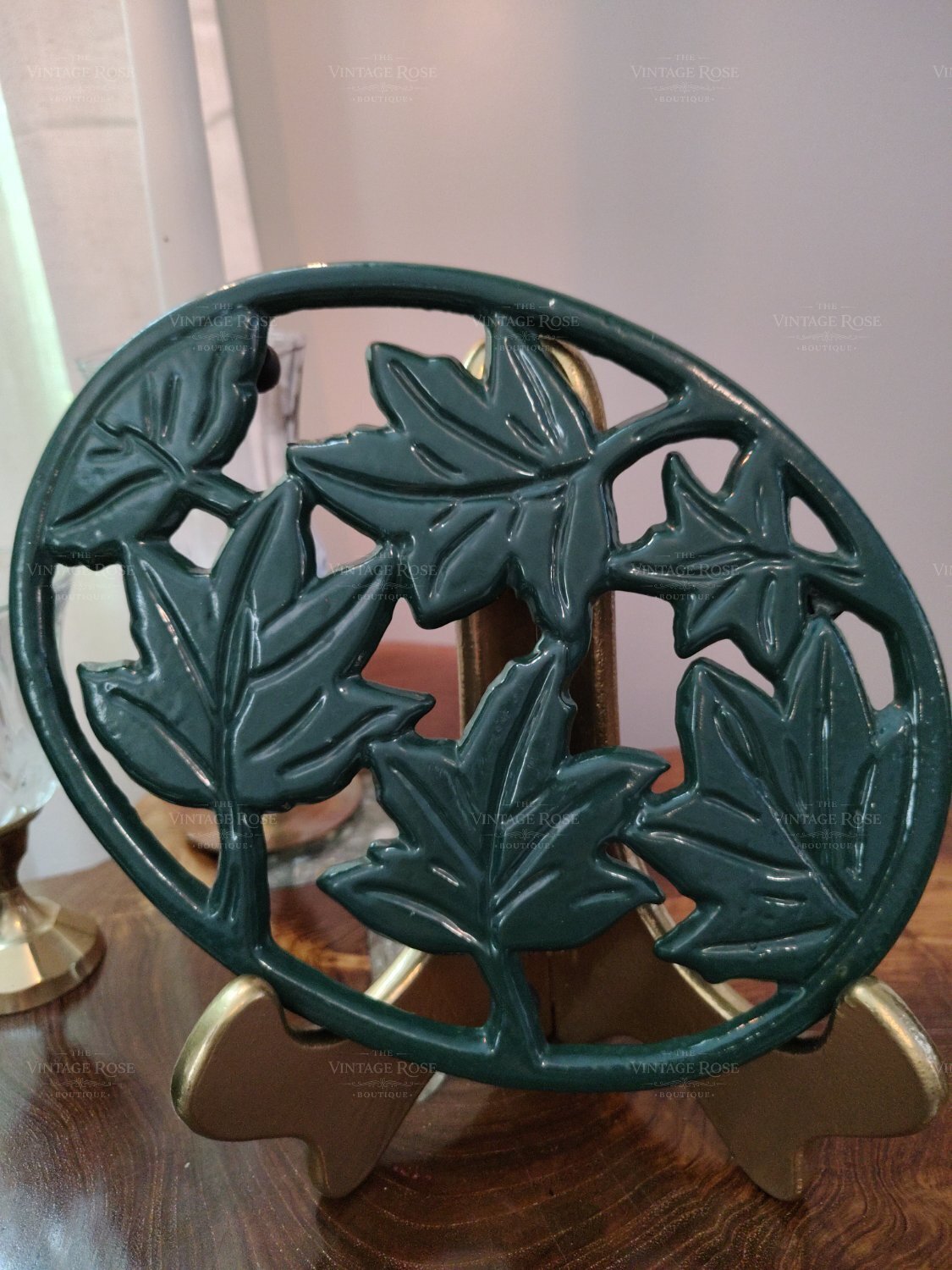
Vintage Forest Green Ivy Trivet — Openwork Cast Metal, 1995
$16.00Painted Metal
HDRK-VR-0042 -
Fair
Mid-Century (1940s–1960s)
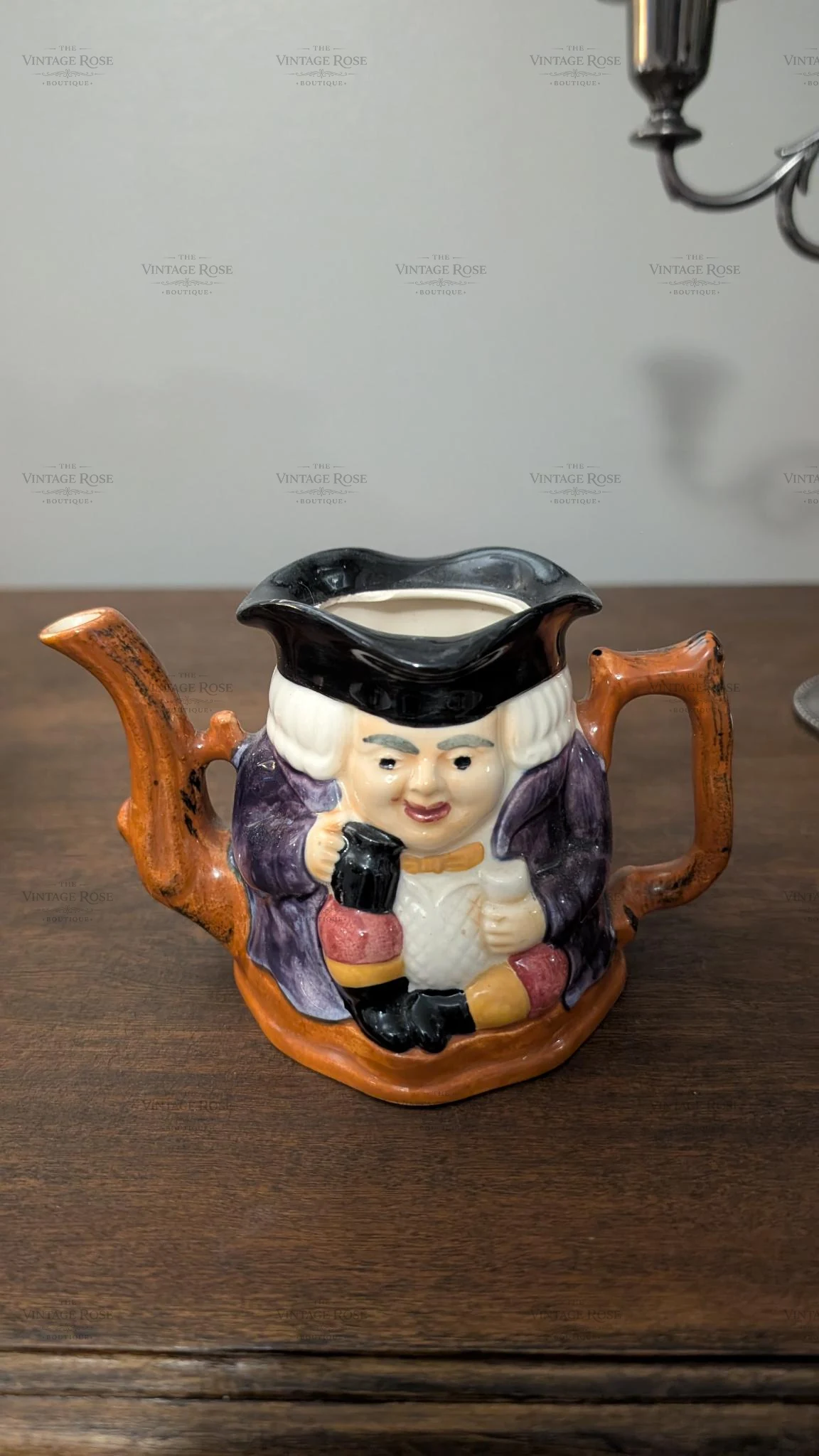
Vintage Shorter England Toby Jug Teapot — Hand-Painted Staffordshire Gentleman, Circa 1930s–1950s (No Lid)
$34.00Porcelain / Ceramic
HDRK-VR-0014