 1 / 6
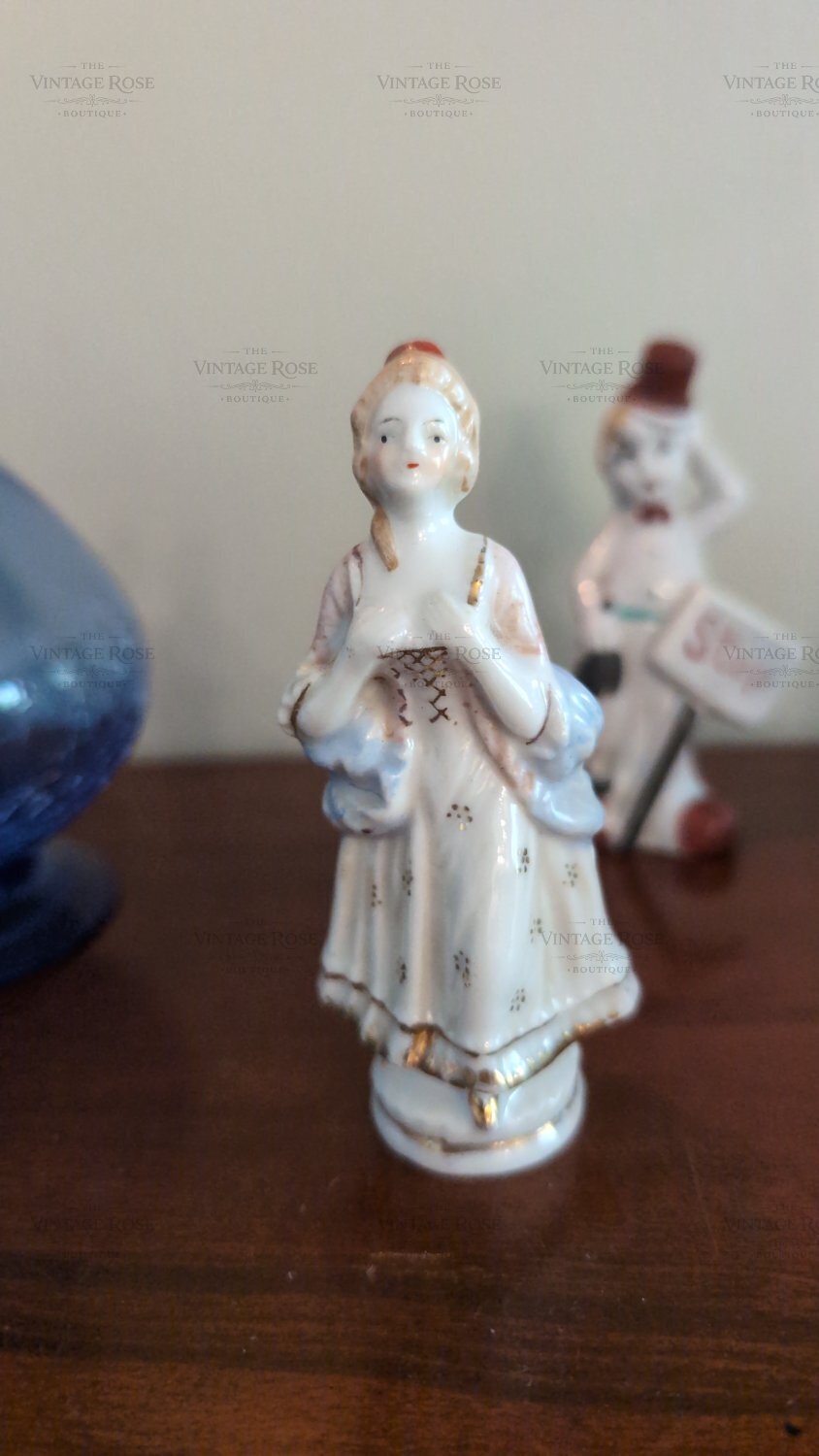
Miniature Hand-Painted Occupied Japan Porcelain Lady Figurine — Powder-Blue Muff & Gilt-Sprigged Skirt
Price in USD. Shipping is $5.95 to the contiguous US — see our Shipping Policy.
- Era: Occupied Japan, 1945–1952
- Mark: Hand-brushed MADE IN OCCUPIED JAPAN in black on the underside
- Material: Hand-painted glazed porcelain with gilt accents
- Subject: 18th-century lady with muff, on a small round plinth
- Palette: Ivory, powder blue, soft pink, blonde, gilt; small red cap
- Size: Approximately 3 inches tall — a curio-shelf piece
Miniature Hand-Painted Occupied Japan Porcelain Lady Figurine — Powder-Blue Muff & Gilt-Sprigged Skirt
Occupied Japan (1945–1952)
Hand-Painted Japanese Export Figurine
She came to us from the estate of a 91-year-old woman in Durham, North Carolina, where she had spent many years on a curio shelf alongside other small porcelain pieces of similar quiet character. The owner had moved south from the Philadelphia area earlier in life, and a small handful of her things made the trip with her — pieces that had been in the family long enough to be worth packing carefully, but modest enough to be lived with rather than locked away. This lady was one of them.
She was made in Japan between 1945 and 1952, during the seven-year window when American import law required the longer mark Made in Occupied Japan on the underside of every piece. The Japanese kilns of that period were skilled and prolific, and small hand-painted figurines like this one were one of their staple exports — sold through American gift shops, dime stores, and department-store china counters by the thousand. They ended up on shelves and étagères all across the country, where many of them stayed for decades. Hers stayed on a Philadelphia shelf, then a Durham one. The gilt has worn a little at the highest-touched spots, the way it tends to on hand-gilded pieces this old, and there is a faint paint ghost on her back from where she rested against a neighbor for many years. The brush-painted mark on her underside is slightly smudged. Small honest signs of a long, careful life.
Specifications
- Dimensions
- N/A
- Weight
- 1 lbs
- SKU
- HDRF-VR-0039
- Era: Occupied Japan, 1945–1952
- Mark: Hand-brushed MADE IN OCCUPIED JAPAN in black on the underside of the plinth
- Material: Hand-painted glazed porcelain with gilt accents
- Subject: 18th-century lady holding a muff, on a small round columnar plinth
- Palette: Ivory ground, powder blue, soft blush pink, blonde hair, gilt floret sprigs; small red cap
- Production: Hand-painted, hollow-base porcelain with original kiln vent
- Size: Approximately 3 inches tall — a small curio-cabinet or shelf piece
Related products
-
 Very Good
Mid-Century (1940s–1960s)
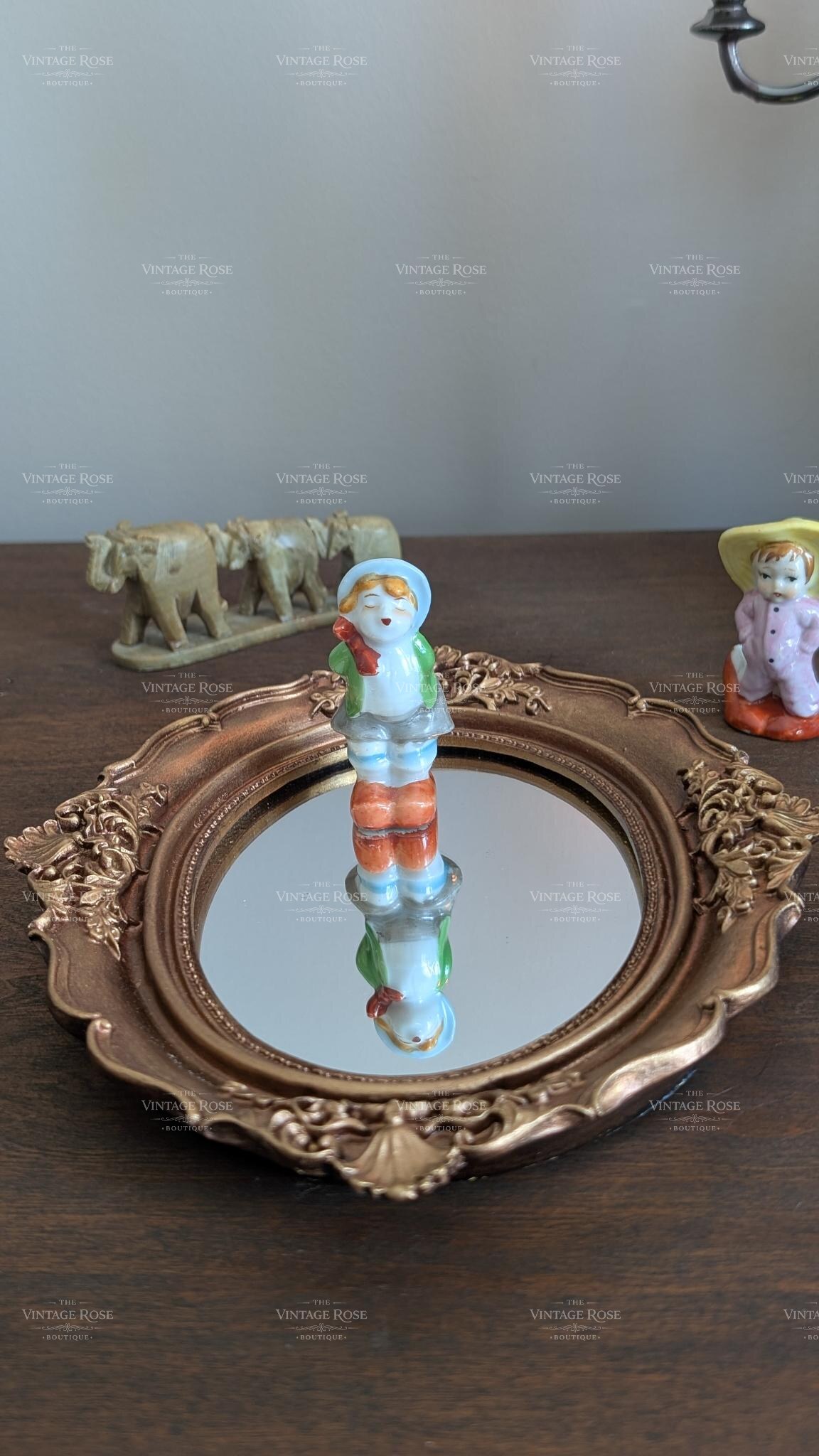
Vintage Hand-Painted Porcelain Dutch Girl Figurine — Blue Bonnet & Red Clogs, Made in Japan
$16.00Porcelain / Ceramic
HDRF-VR-0021 -
Good
Art Deco (1920s–1930s)
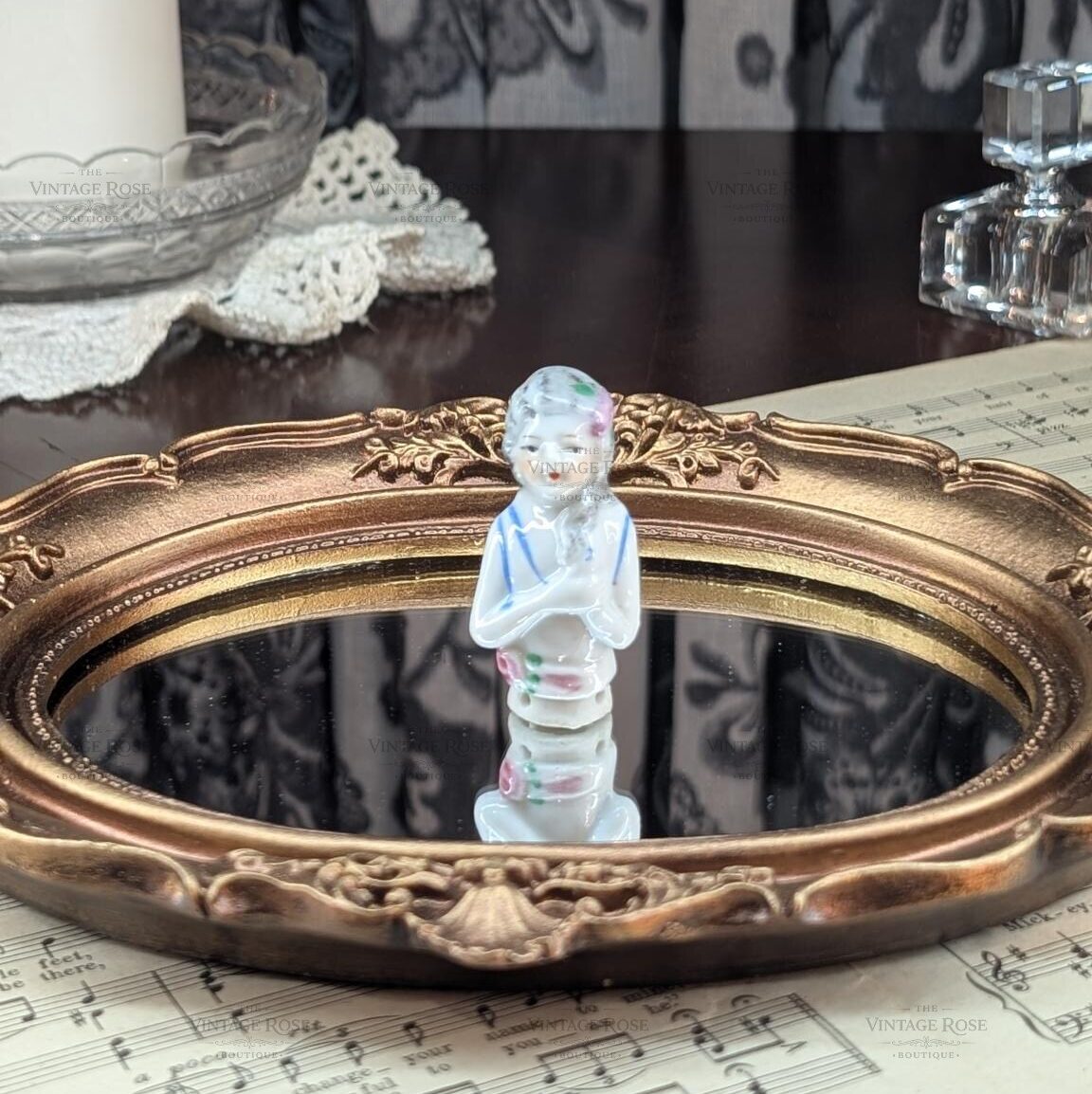
Vintage Porcelain Half-Doll — Rococo Court Lady with Powdered Coiffure, Pincushion Figurine, Japan
$32.00Porcelain / Ceramic
HDRF-VR-0010 -
Very Good
1940s
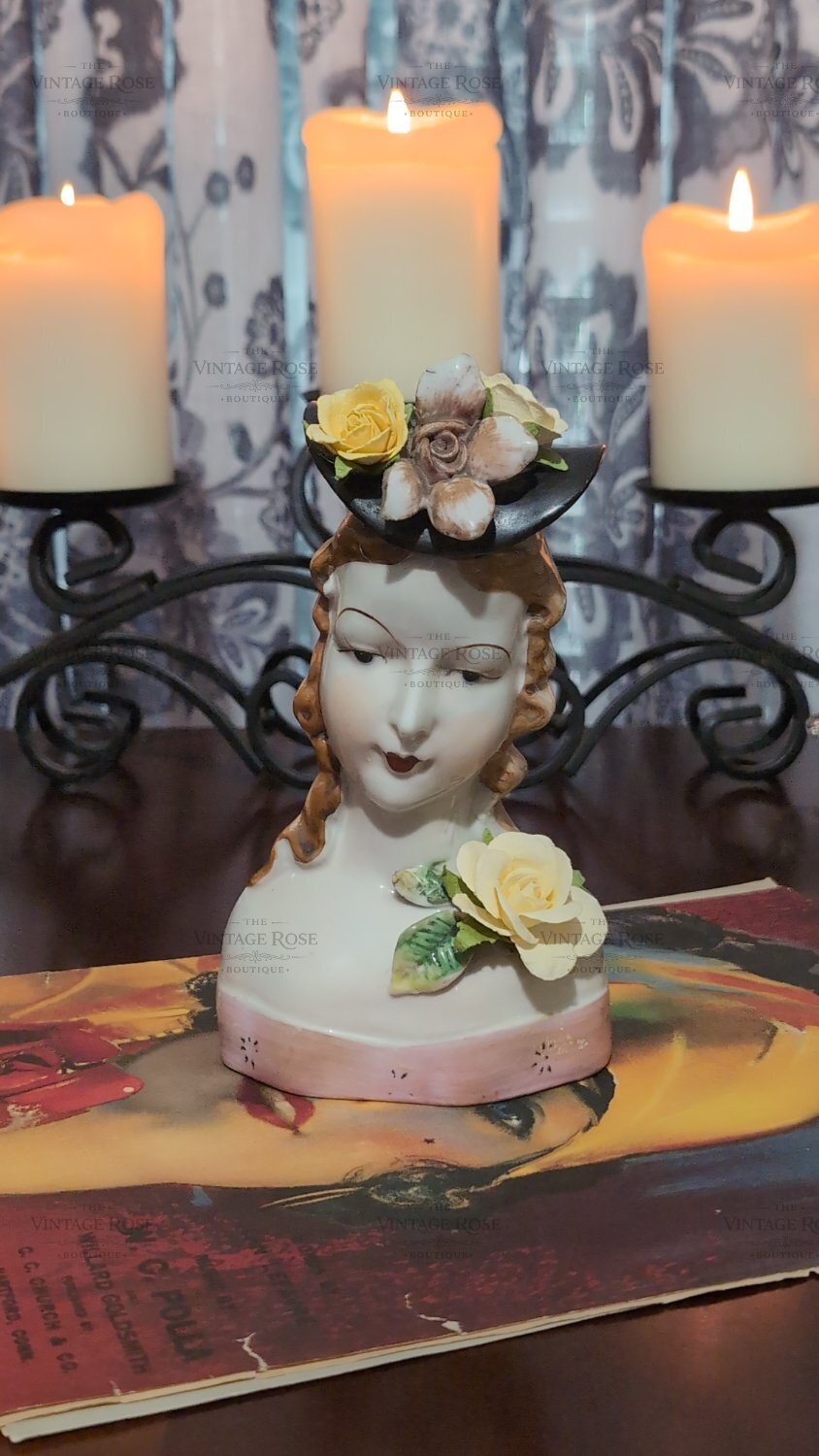
Vintage Porcelain Lady Bust Figurine — Hand-Painted, Made in Occupied Japan, c. 1945–1952
$36.00Porcelain
HDRF-VR-0006 -
Good
Mid-Century (1940s–1960s)
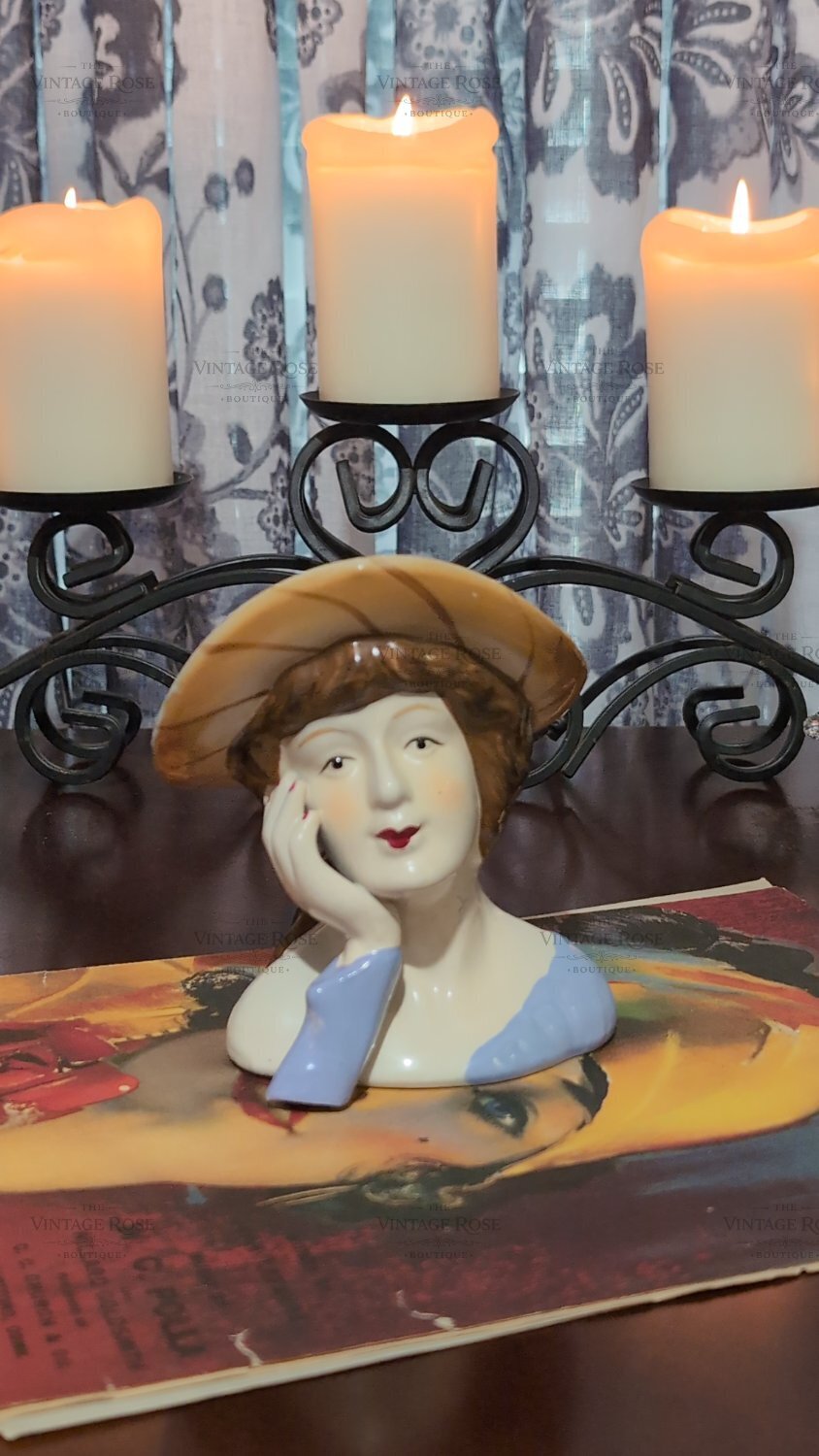
Vintage Porcelain Lady Bust Figurine — Wide-Brimmed Hat & Hand-on-Cheek Pose
$38.00Porcelain / Ceramic
HDRF-VR-0017