 1 / 11
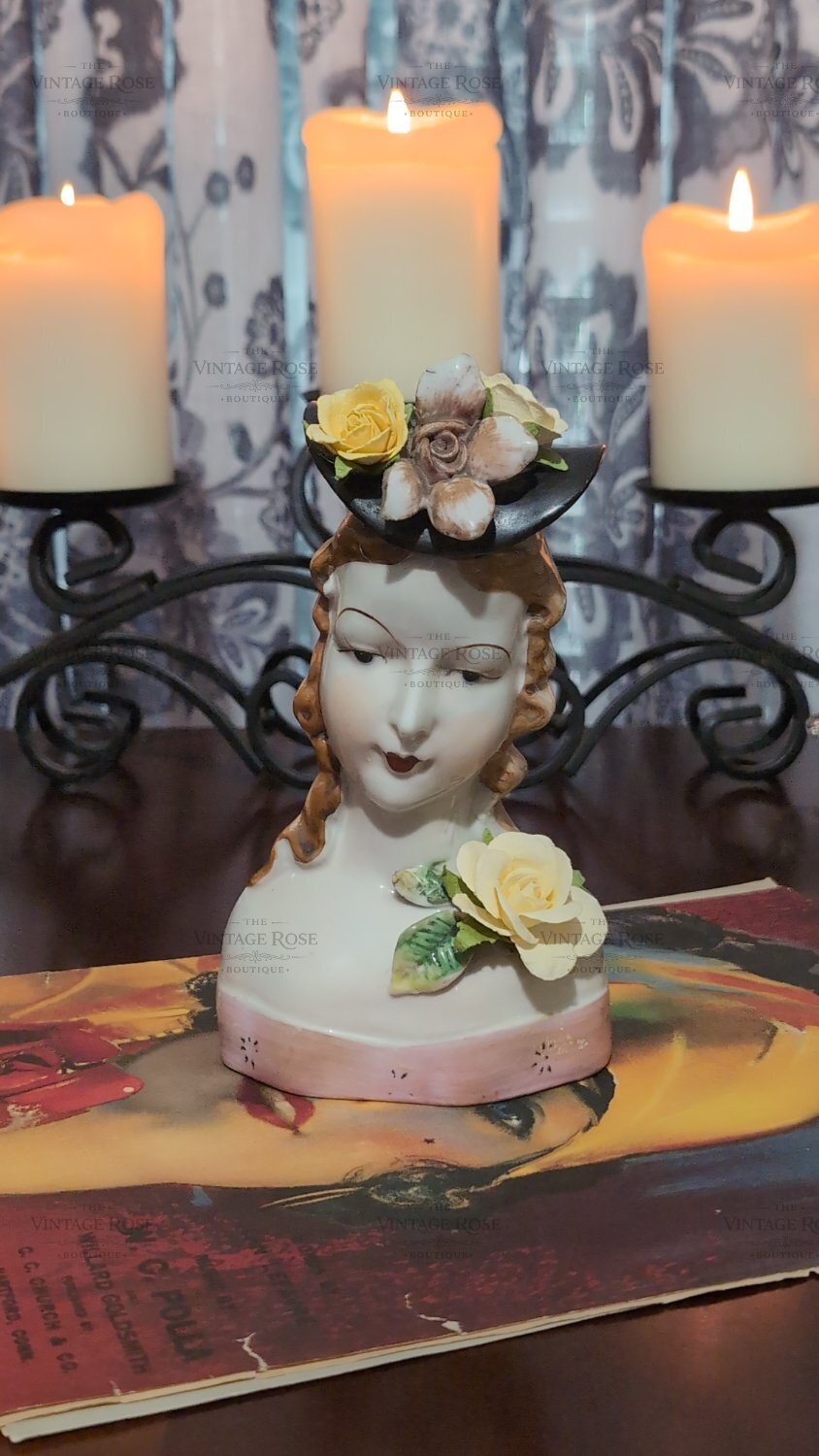
Vintage Porcelain Lady Bust Figurine — Hand-Painted, Made in Occupied Japan, c. 1945–1952
Price in USD. Shipping is $10.95 to the contiguous US — see our Shipping Policy.
Highlights
- Genuine Made in Occupied Japan (MOOJ) porcelain, 1945–1952
- Hand-painted facial details — arched brows, red lips, defined eyes
- Brown molded ringlet curls beneath a dark teal wide-brim hat
- Original fabric roses at shoulder and hat — mixed-media construction
- Pink-banded oval base with standard MOOJ mark
- Slip-cast bisque and glazed porcelain construction
Condition
Very good vintage condition. The face and glaze are clean and intact with no cracks or crazing, and the hand-painted details are well preserved. The original fabric roses at the shoulder and hat are intact and show only gentle age-appropriate softening. One small porcelain leaf tip at the left shoulder has a chip. Minor surface grime is present in crevices consistent with age. These details are reflected in pricing.Vintage Porcelain Lady Bust Figurine — Hand-Painted, Made in Occupied Japan, c. 1945–1952
Circa 1945–1952 (Allied Occupation of Japan)
Made in Occupied Japan (MOOJ) Porcelain Figurine, Romantic Lady Bust
Few collectible categories are as precisely dateable as "Made in Occupied Japan" ware. Between 1945, when Japan surrendered at the end of World War II, and April 1952, when the Treaty of San Francisco formally ended the Allied Occupation, U.S. Customs required that all Japanese goods exported to America carry the phrase "Made in Occupied Japan" or "Occupied Japan." The mark was political as much as practical — a daily visible acknowledgment, in American homes and department stores, that Japan was no longer a sovereign trading partner but a nation under Allied administration. When the treaty took effect in April 1952, the requirement disappeared and exports reverted to simple "Made in Japan" marks.
That seven-year window turned MOOJ pieces into one of the tightest dating categories in American collecting, and it made the category a collector field of its own almost immediately. Even in the 1950s, dealers were beginning to recognize that MOOJ-marked ware would only ever exist from that narrow period.
The story of the pieces themselves is also the story of Japan's postwar economic reconstruction. With domestic demand shattered by the war, Japanese ceramic factories — especially in Nagoya, Seto, and the surrounding prefectures — pivoted aggressively toward the American export market to earn hard currency. They produced enormous quantities of inexpensive decorative porcelain for American middle-class homes: figurines, tea sets, salt and pepper shakers, vases, and lady busts exactly like this one. The subjects reflected what American buyers wanted on their vanities and shelves in the late 1940s — glamorous women in sweeping hats, sentimental florals, and romantic historical fantasy.
The mixed-media construction here — molded porcelain combined with real fabric roses — is a nice small touch, the kind of thoughtful extra step that elevates a modest export piece slightly above the run-of-the-mill. The small chip to the porcelain leaf at the shoulder and the minor crevice grime are honest age, reflected in the price.
Specifications
- Dimensions
- 4.5 × 7.75 in
- Weight
- 1.0 lbs
- SKU
- HDRF-VR-0006
A Little Piece of Postwar History
Between 1945 and 1952, during the Allied Occupation of Japan, U.S. law required all Japanese goods exported to America to carry the mark "Made in Occupied Japan." That seven-year window makes MOOJ pieces some of the most precisely dateable collectibles you'll find — and this charming lady bust is a lovely example of the era's romantic, feminine decorative sensibility. Produced for the American domestic market, porcelain lady busts like this one were among the most popular Occupied Japan export wares. They captured a glamorous ideal that resonated with postwar home decor — all swept curls, elegant hats, and hand-painted beauty. This particular lady features brown molded ringlet curls beneath a sweeping dark teal wide-brim hat, with her face delicately rendered by hand: arched brows, softly defined eyes, and a classic red lip. What makes this bust especially appealing is its mixed-media construction: original fabric roses in cream and yellow adorn the hat and shoulder, adding a soft, dimensional quality that pure porcelain alone can't achieve. It's a lovely bit of craftsmanship — the kind of thoughtful detail that speaks to the care Japanese artisans brought to these export pieces, even at modest price points. The construction is slip-cast bisque and glazed porcelain with a hollow interior, consistent with standard Occupied Japan production methods. The pink-banded oval base is marked "MADE IN OCCUPIED JAPAN" — the straightforward, standard two-line export mark required during the Occupation period. Whether she finds a home on a vanity, a curated shelf, or alongside other MOOJ treasures, this bust carries the warmth and nostalgia of a fascinating chapter in both Japanese and American decorative history. MOOJ figurines and lady busts have a devoted collector community and steady demand — and pieces with this kind of hand-painted charm never go out of style.Details
- Genuine Made in Occupied Japan (MOOJ) porcelain, c. 1945–1952
- Hand-painted facial details — arched brows, red lips, defined eyes
- Brown molded ringlet curls beneath a dark teal wide-brim hat
- Original fabric roses at shoulder and hat (cream and yellow)
- Pink-banded oval base
- Base marked "MADE IN OCCUPIED JAPAN"
- Slip-cast bisque and glazed porcelain construction, hollow interior
- Approximately 8 inches tall, 5 inches wide
Condition
Very good vintage condition. The face and glaze are clean and intact — no cracks, no crazing — and the hand-painted details are well preserved. The original fabric roses at the shoulder and hat are intact and show only gentle age-appropriate softening. Please note:- One small porcelain leaf tip at the left shoulder has a chip.
- Minor surface grime is present in crevices, consistent with age.
Related products
-
 Very Good
Mid-Century (1940s–1960s)
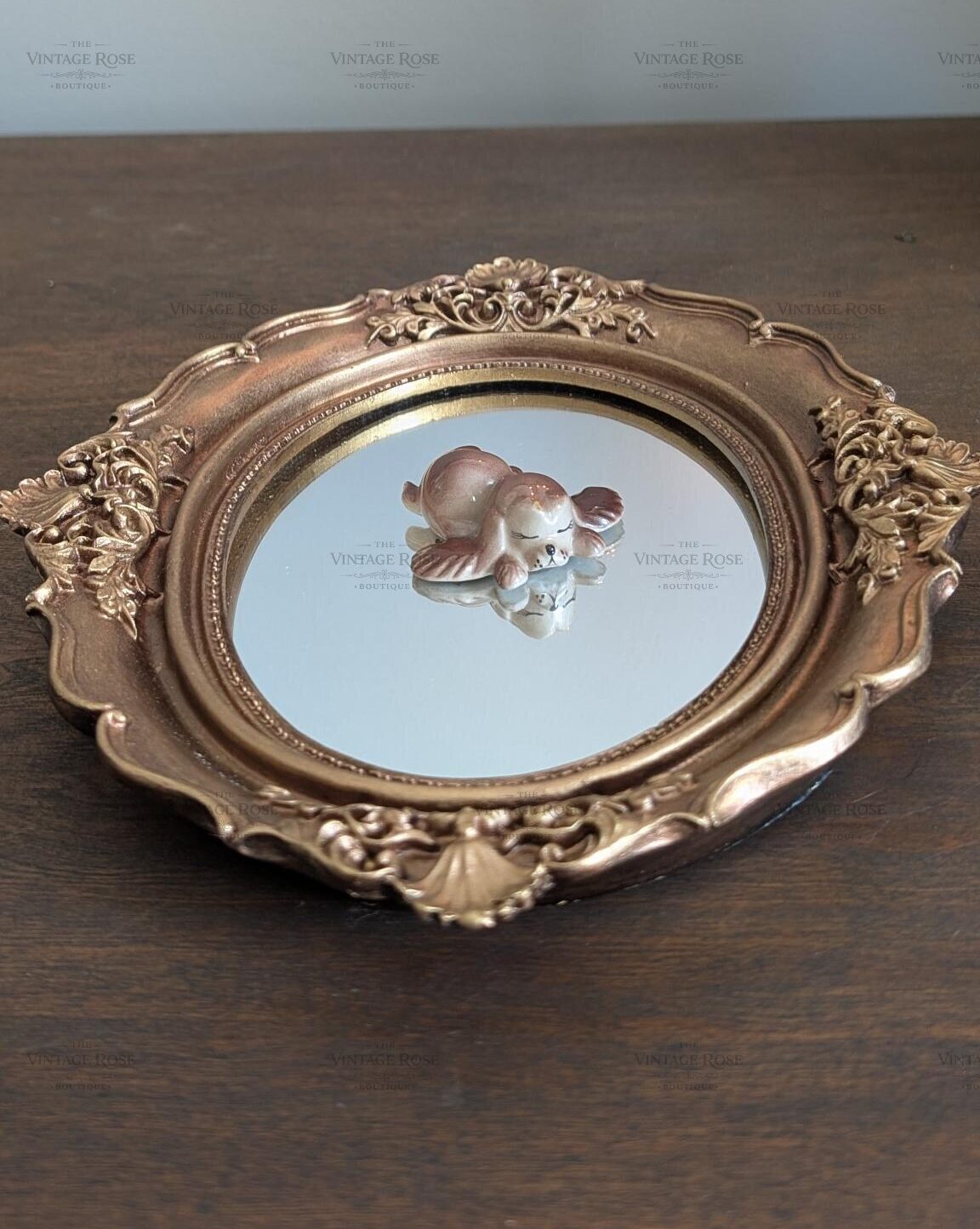
Vintage Ceramic Sleeping Cocker Spaniel Puppy Figurine — Mid-Century Brown Glaze Miniature
$18.00Porcelain / Ceramic
HDRF-VR-0002 -
Good
Early 20th Century (c. 1900s–1940s)
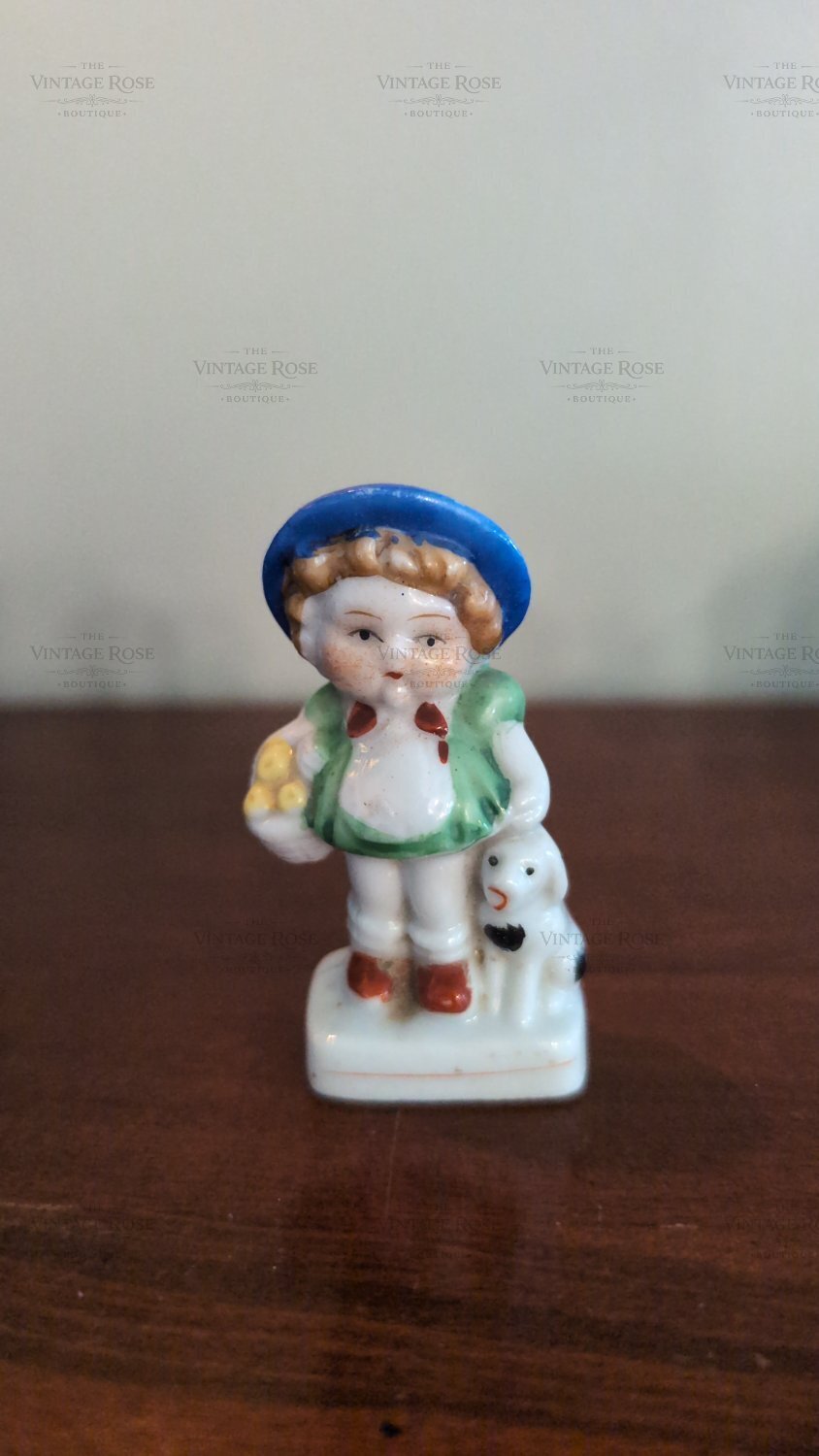
Vintage Hand-Painted Porcelain Child with Spotted Dog — Prewar Japan Figurine
$24.00Porcelain / Ceramic
HDRF-VR-0042