 1 / 8
Vintage Miniature Hand-Painted Kutani-Style Cup & Saucer — Iron-Red Figural
Price in USD. Shipping is $10.95 to the contiguous US — see our Shipping Policy.
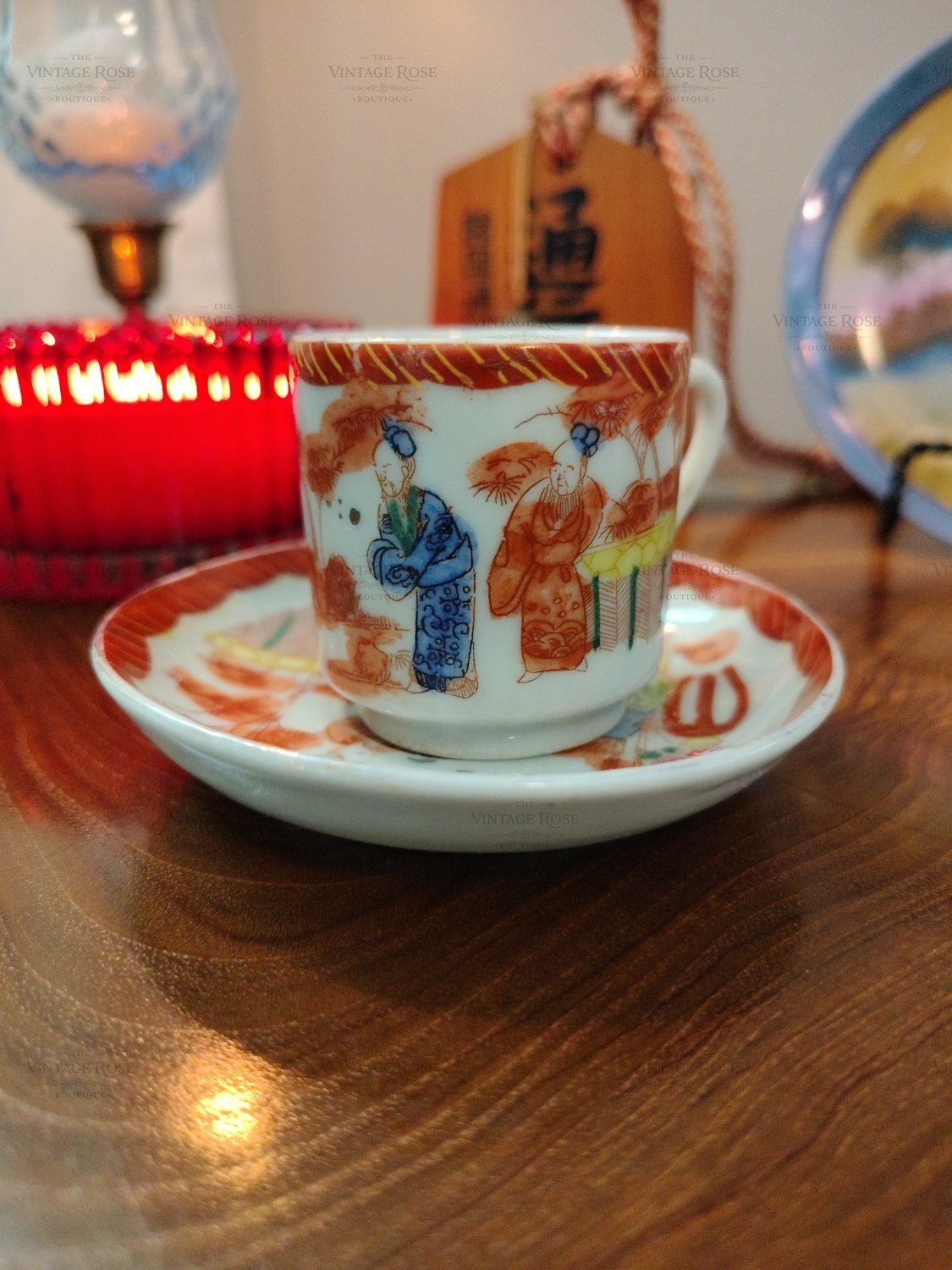
- Miniature scale — saucer 3.5" in diameter, cup about 2" tall; demitasse-style form, but petite
- Kutani-style aka-e decoration — iron-red and gold with polychrome enamel in blue, green, and yellow on the robes
- Genuinely hand-painted — brushwork varies figure to figure, not a printed transfer
- Eggshell-thin porcelain — light in the hand, with a diagonal red-and-gold hatched band around both rims
- Mid-20th-century Japanese export, from a Long Island estate later settled in North Carolina
Vintage Miniature Hand-Painted Kutani-Style Cup & Saucer — Iron-Red Figural
Mid-20th Century
Kutani-Style Aka-e Porcelain
This miniature cup and saucer came from the estate of a collector who moved south from Long Island, New York, and later settled in Wake Forest, North Carolina. She kept the small, careful things — the pieces that reward a close look. This is one of them: a hand-painted Japanese cup and saucer in the Kutani export style, the warm iron-red-and-gold ware collectors know as "geisha ware." At 3.5 inches across the saucer, it's noticeably smaller than a standard demitasse, and all the more charming for it.
The scene is a garden gathering — robed scholars among pine and bamboo, with rockwork and potted plants, their robes touched with blue, green, and yellow enamel. A red-and-gold hatched band circles both rims. It's genuinely hand-painted, the brushwork shifting slightly from figure to figure, on porcelain thin enough to glow against the light. The piece carries no maker's mark; both undersides are plain white glazed foot rings, so we don't attribute it to any factory. What we can say plainly is what it is: mid-20th-century Japanese export porcelain, painted by hand in the Kutani manner, and small in a way that makes people reach for it twice.
Specifications
- Dimensions
- 8 × 6 × 6 in
- Weight
- 2 lbs
- SKU
- HDRH-VR-0020
Details
- Form: miniature demitasse-style cup and saucer
- Saucer: 3.5 inches in diameter
- Cup: about 2 inches
- Decoration: Kutani-style aka-e — iron-red and gold with blue, green, and yellow polychrome enamel
- Scene: robed scholars in a garden of pine, bamboo, rockwork, and potted plants
- Technique: hand-painted, brushwork varying figure to figure — not a printed transfer
- Body: eggshell-thin porcelain with a diagonal red-and-gold hatched band at both rims
- Origin: mid-20th-century Japanese export; unmarked, no backstamp
- Provenance: Long Island collector's estate, later settled in Wake Forest, North Carolina
Related products
-
 Good
Mid-Century (1940s–1960s)
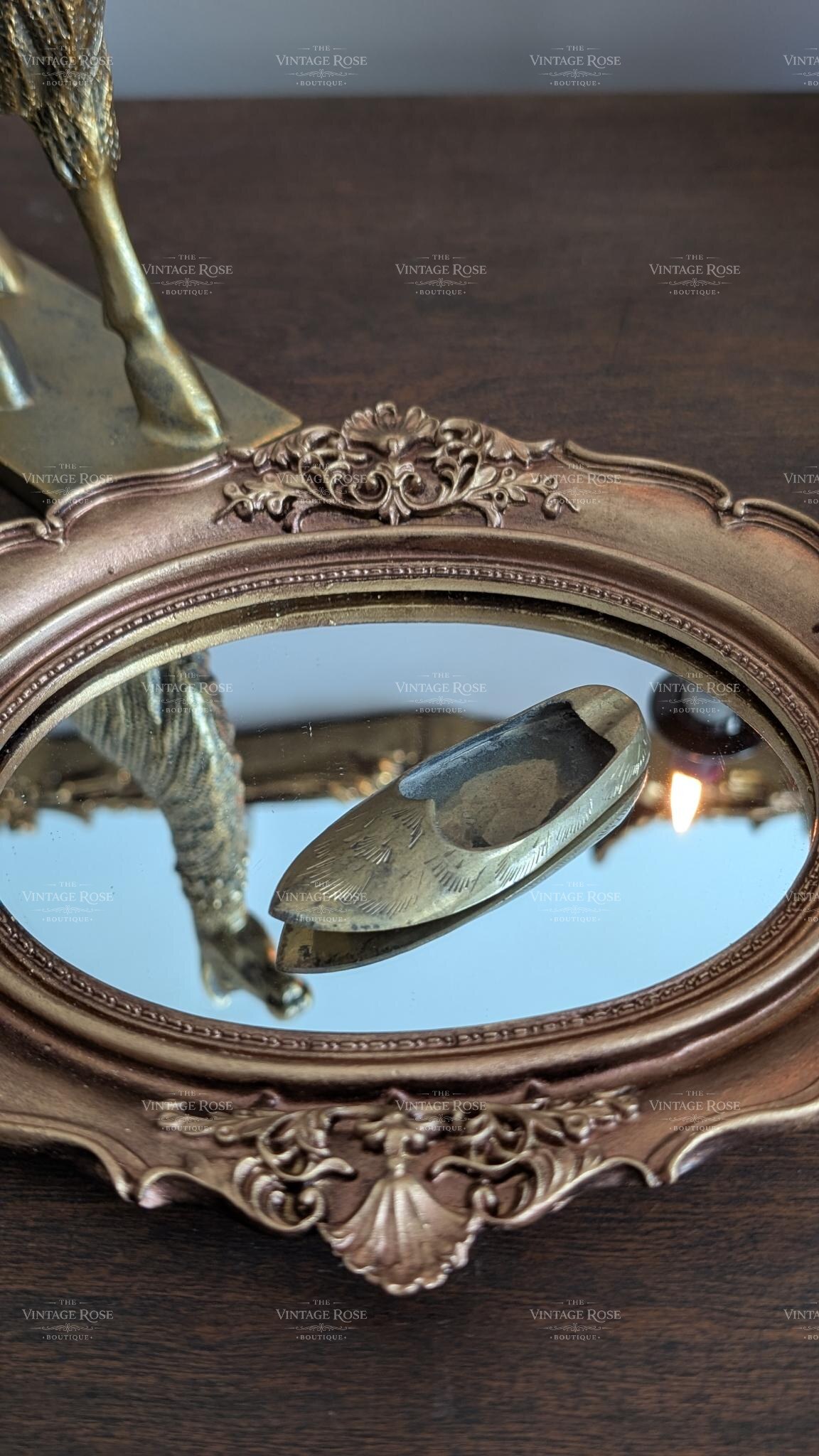
Vintage Brass Mojari Slipper — Miniature Engraved Indian Brass Ornament, Ashtray & Incense Rest
$18.00Brass / Copper
HDRH-VR-0001 -
Good
Mid-Century (1940s–1960s)
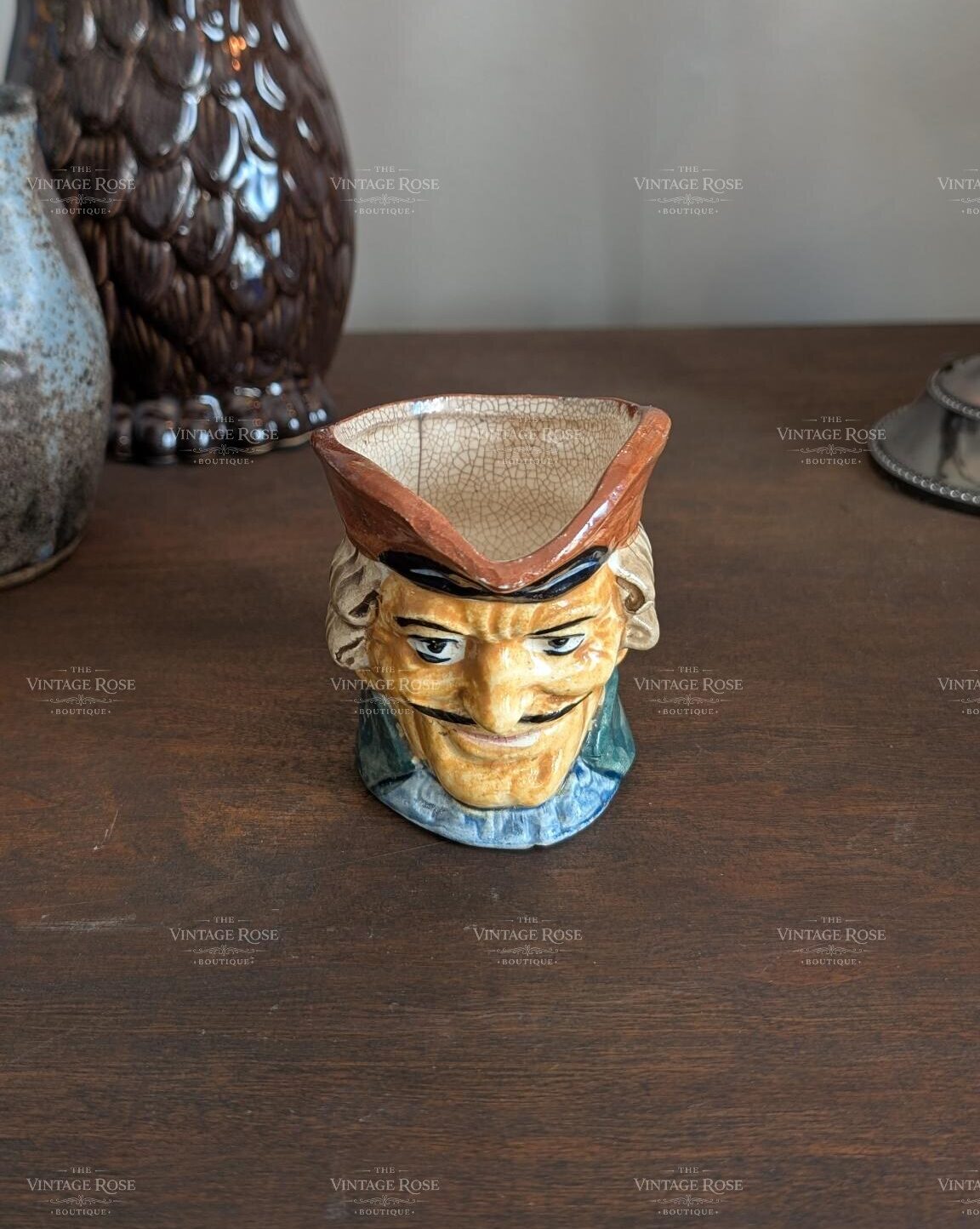
Vintage “E.W.” Character Jug — Made in Occupied Japan, 1945–1952
$12.00Porcelain / Ceramic
HDRK-VR-0009 -
Very Good
1990s
International Santa Claus Collection United States Santa — 1992 Hand-Painted Resin Figurine (IRS SC06)
$22.00Resin
HOXM-VR-0009 -
Very Good
Mid-Century (1940s–1960s)
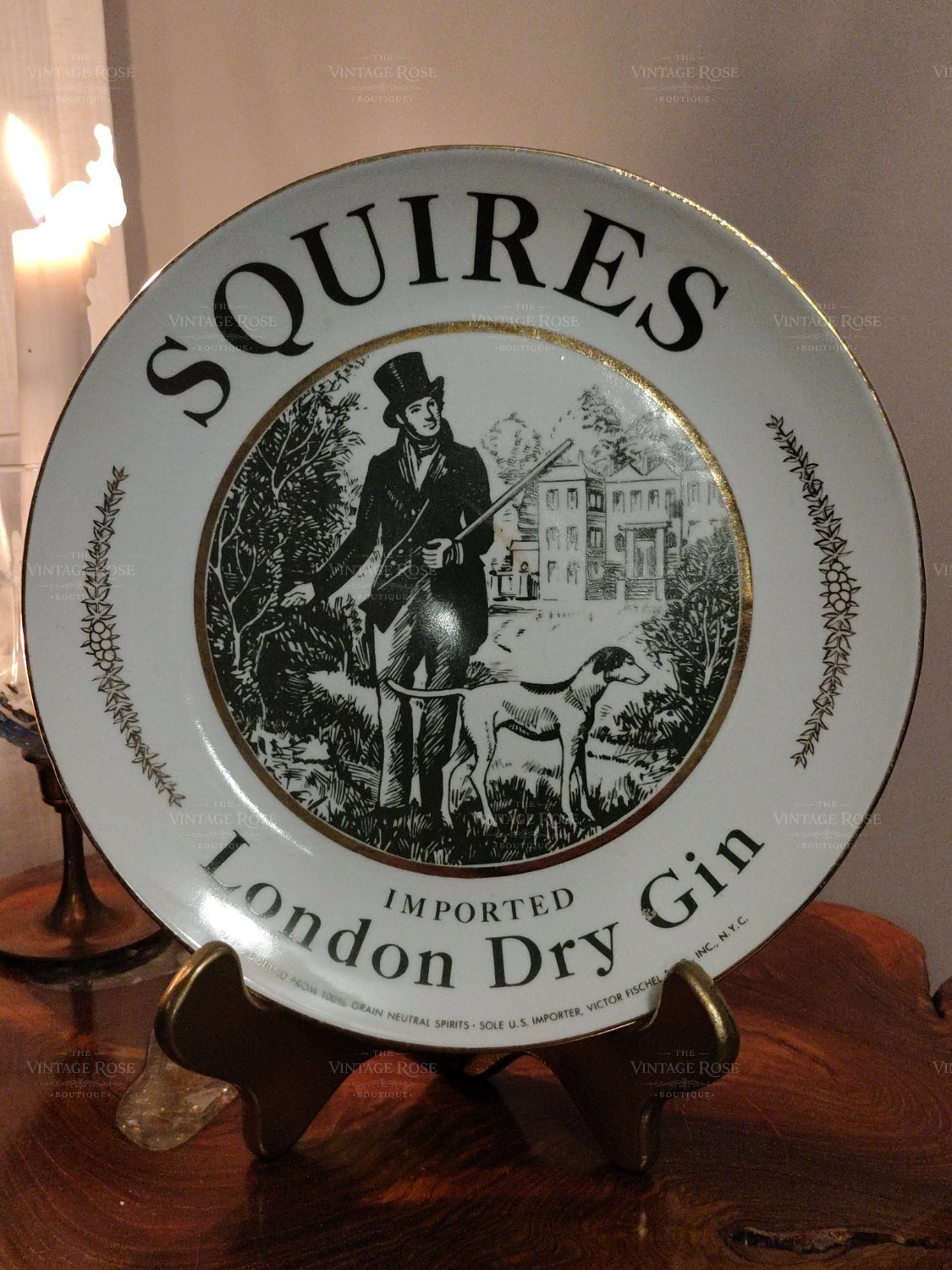
Squires Imported London Dry Gin Advertising Plate — Sabina Line 22K Gold, 10-Inch
$34.00Gilt, Porcelain / Ceramic
HDRH-VR-0019