 1 / 6
Mino Ware Kyoto Scenic Yunomi Tea Cups — Kinkaku-ji & Maiko Porcelain Pair
Price in USD. Shipping is $10.95 to the contiguous US — see our Shipping Policy.
Details
- Set of 2 Mino ware yunomi tea cups
- Porcelain with speckled white/cream glaze
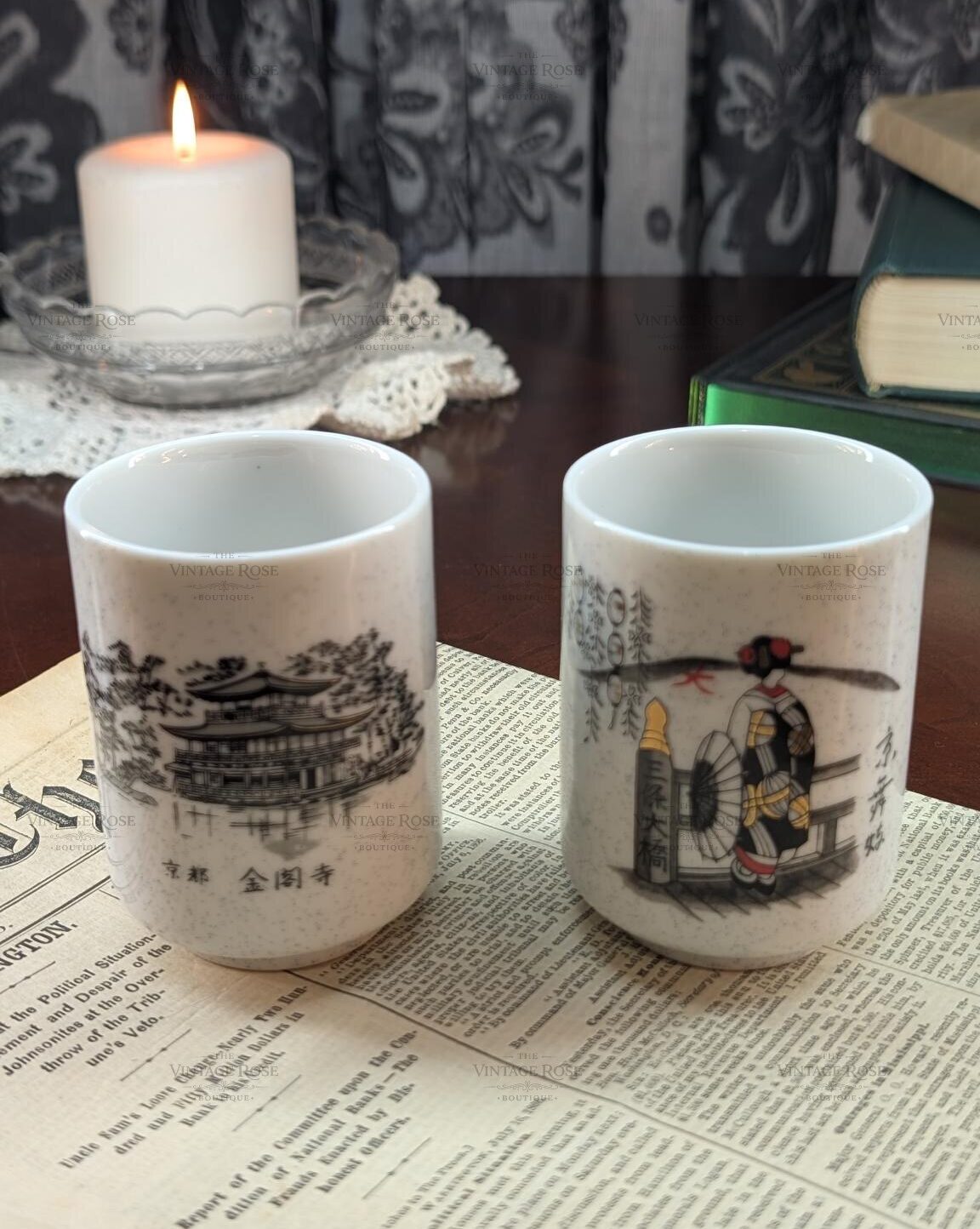
- Cup 1: Kinkaku-ji (Golden Pavilion), Kyoto
- Cup 2: Kyoto Maiko at Sanjo Ohashi Bridge
- Black ink illustration with selective red accents
- Approx. 4″ tall x 2.75″ diameter each
- Made in Japan
Condition
Excellent vintage condition. No chips, cracks, crazing, or wear. Unmarked — produced for the Japanese domestic market, likely purchased as Kyoto omiyage (souvenir ware).Mino Ware Kyoto Scenic Yunomi Tea Cups -- Kinkaku-ji & Maiko Porcelain Pair
Late 20th Century
Japanese Mino Ware Porcelain, Kyoto Scenic Souvenir
Mino ware (美濃焼, Mino-yaki) comes from the Tono region of Gifu Prefecture — the towns of Tajimi, Toki, Mizunami, and Kani — where potters have been working clay for over thirteen hundred years. Today, Mino ware accounts for more than half of all ceramics produced in Japan. It was designated a Traditional Craft by the Japanese government in 1978.
These yunomi — tall, handleless cups for everyday tea drinking — carry scenes of Kyoto rendered in the sumi-e ink illustration tradition. One depicts Kinkaku-ji, the Golden Pavilion, reflected in its mirror pond — a UNESCO World Heritage site since 1994. The other shows a maiko (apprentice geisha) crossing the Sanjo Ohashi Bridge beneath paper lanterns, with a red daimonji character marking the hillside behind her.
The cups are unmarked, which is consistent with production for the Japanese domestic market. They were most likely purchased as omiyage — the Japanese tradition of bringing home a souvenir gift from a place you’ve visited. A yunomi carrying a memory of Kyoto, meant to be held in both hands while the steam rises.
Specifications
- Dimensions
- 3 × 3 × 4 in
- Weight
- 1.0 lbs
- SKU
- HDRK-VR-0001
A Piece of Kyoto, Morning and Evening
There's a tradition in Japan of bringing home a yunomi from the places you've visited -- a cup that carries a memory. Pour your morning tea and there's Kinkaku-ji hovering above its reflection, golden even in black ink. Evening tea, and there's a maiko making her way through Gion, lanterns overhead, the whole scene caught in a few confident brushstrokes and a touch of red. These are the cups you'd see stacked behind the counter at a sushi restaurant in Kyoto, or lined up at a tea shop near the temple gates. Yunomi -- literally "hot water drinking" -- are Japan's everyday tea vessels. No ceremony required. Just tea, and maybe a quiet moment to notice the details.The Cups
The first cup depicts Kinkaku-ji, the Golden Pavilion -- Kyoto's most photographed landmark and a UNESCO World Heritage site since 1994. The illustration wraps the cup in the sumi-e tradition: the three-story pavilion surrounded by pines, its reflection shimmering in the pond below. The kanji at the base reads 京都 金閣寺 -- Kyoto, Kinkaku-ji. It's the kind of image that gets better the more you look at it. The second cup brings you to the Sanjo Ohashi Bridge, where a maiko -- an apprentice geisha -- walks in full traditional dress. Her obi is patterned, her parasol tilted just so, and paper lanterns (the kind you'd see during Gion Festival) hang above. A red daimonji character marks the hillside behind her. The kanji reads 京舞妓 -- Kyoto Maiko. There's real movement in this one, a whole evening suggested in a single scene. Both cups share a white porcelain body with a fine gray speckle -- a hallmark of certain Mino ware glazes that gives the surface a subtle texture, almost like washi paper. The cylindrical form sits on a gently footed base, and the walls are thick enough to keep your tea warm without burning your hands. Practical and pretty. The Japanese have always been good at that.About Mino Ware
Mino ware (美濃焼, Mino-yaki) comes from Gifu Prefecture's Tono region -- the towns of Tajimi, Toki, Mizunami, and Kani -- where potters have been firing clay since the 7th century. That's over 1,300 years of continuous production. Today, Mino ware accounts for more than 50% of all ceramics produced in Japan, and it was designated a Traditional Craft by the Japanese government in 1978. The tradition hit its stride during the Momoyama period under the patronage of Oda Nobunaga, with the legendary tea master Sen no Rikyu shaping the aesthetic. Four classic styles emerged -- Shino, Oribe, Kizeto, and Setoguro -- and over fifteen recognized styles exist today. It's a tradition broad enough to encompass everything from rustic tea bowls to refined porcelain like these yunomi.Details
- Set of 2 Mino ware yunomi tea cups
- Porcelain with speckled white/cream glaze
- Cup 1: Kinkaku-ji (Golden Pavilion), Kyoto
- Cup 2: Kyoto Maiko at Sanjo Ohashi Bridge
- Black ink illustration with selective red accents
- Approx. 4" tall x 2.75" diameter each
- Made in Japan, Gifu Prefecture
Condition
Excellent vintage condition. No chips, cracks, crazing, or wear. Unmarked — produced for the Japanese domestic market, likely purchased as Kyoto omiyage (souvenir ware).Related products
-
 Very Good
Retro (1960s–1980s)
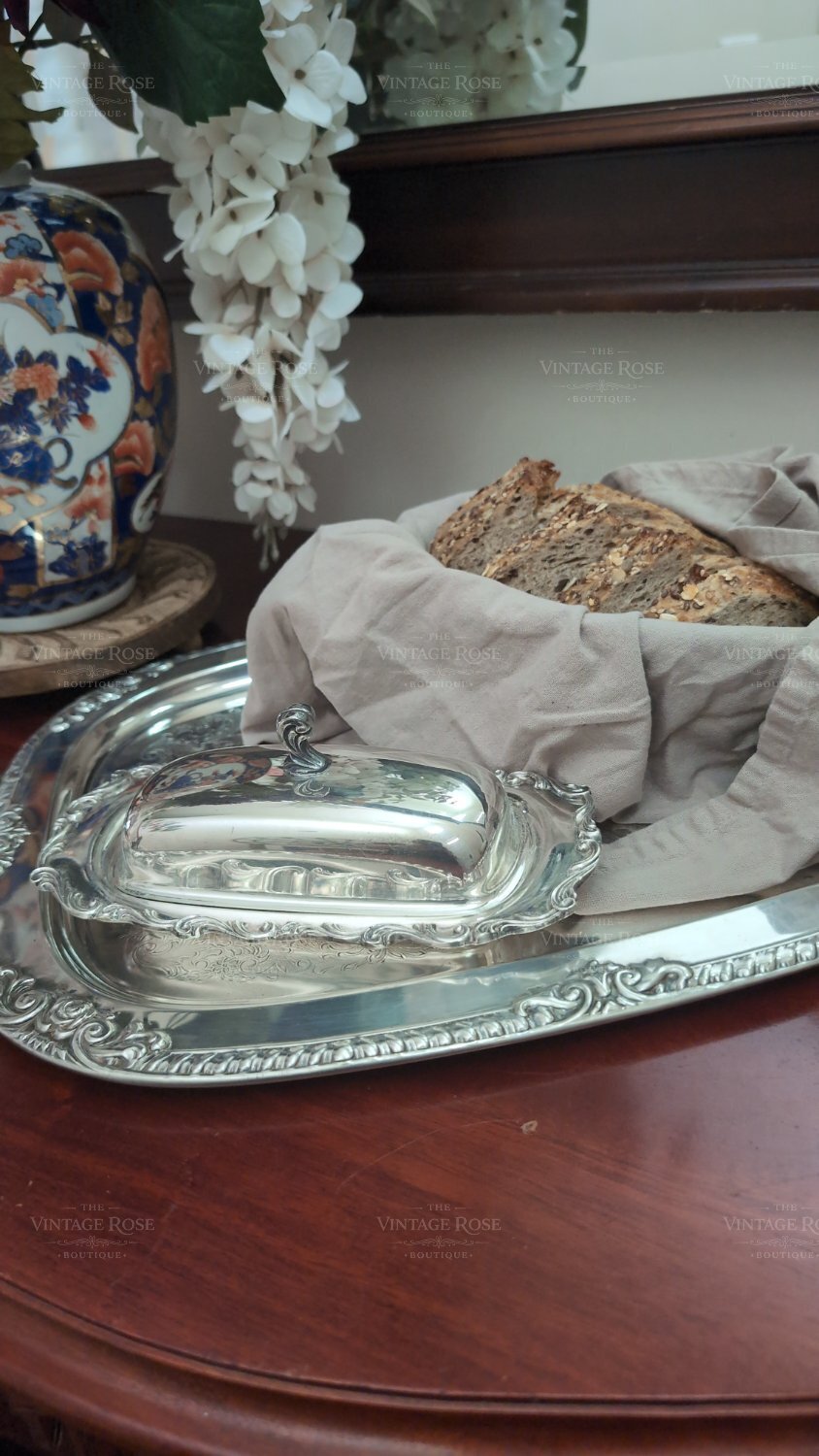
Webster Wilcox Silverplate Covered Butter Dish — Rococo Scroll Border
$38.00Silverplate
HDRK-VR-0027 -
Very Good
1970s
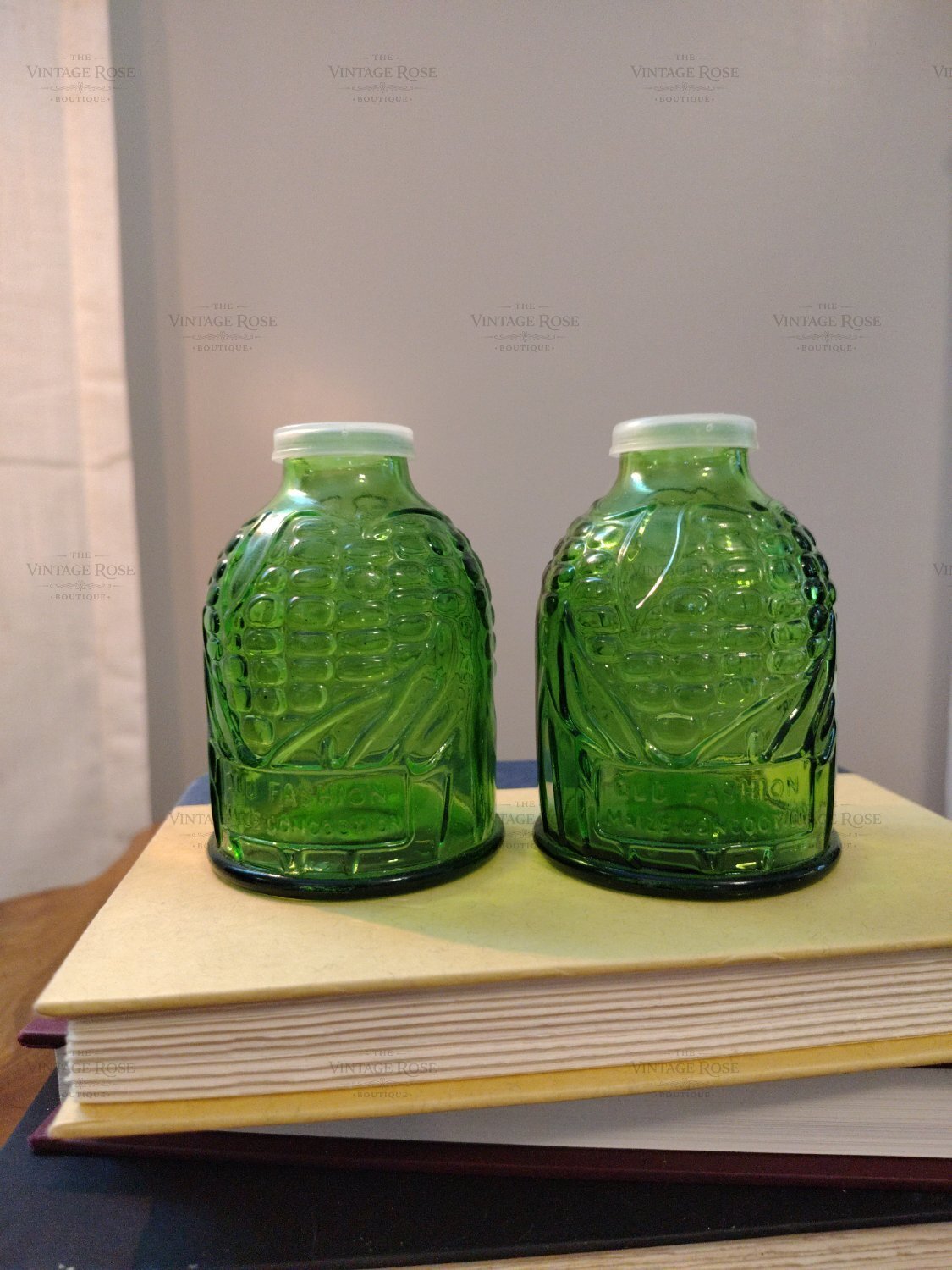
Wheaton Glass Corn Salt & Pepper Shakers — Emerald “Old Doc’s Celebrated Cure” Novelty Bottles, Pair
$24.00Glass
HDRK-VR-0037 -
Very Good
Retro (1970s–1990s)
Vintage Santa & Mrs. Claus Figural Salt & Pepper Shaker Set — Hand-Painted Christmas Novelty Pair
$18.00Plastic
HOXM-VR-0008 -
Good
Mid-Century (1940s–1960s)
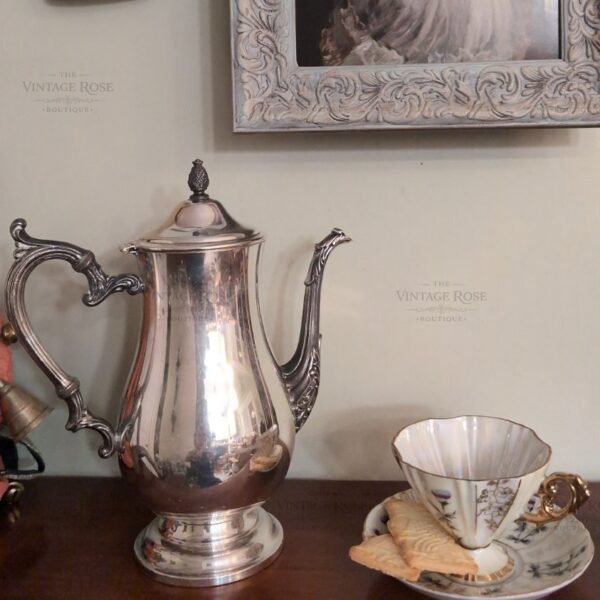
Wm Rogers Silverplate Tea Pot — Rococo Revival
$38.00Silverplate
HDRK-VR-0018