 1 / 9
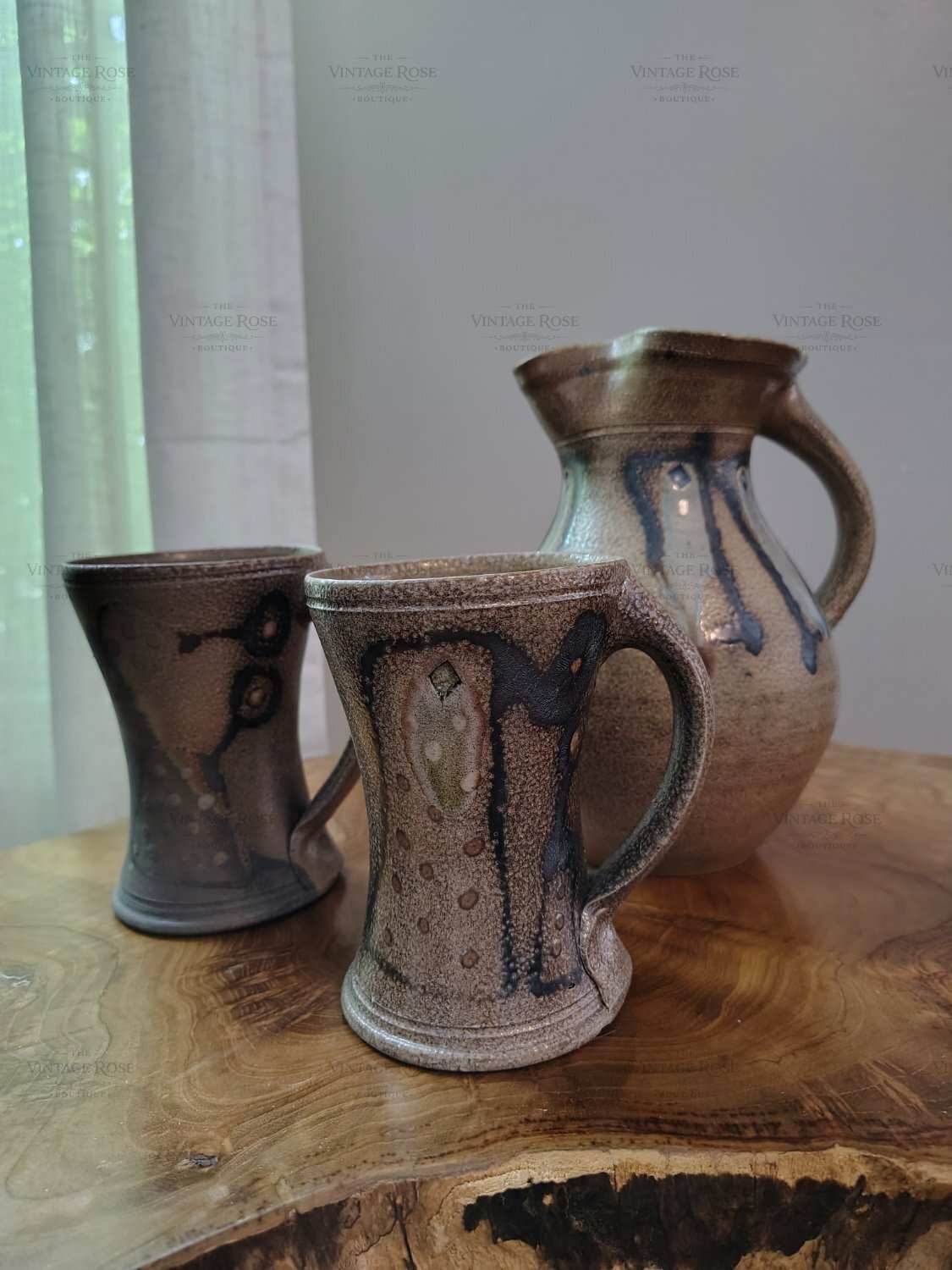
Mark Hewitt Salt-Glazed Stoneware Cup — Cobalt-Decorated North Carolina Studio Pottery, Circular Workshop Monogram Stamp (Post-1995)
Price in USD. Shipping is $10.95 to the contiguous US — see our Shipping Policy.
- Mark Hewitt Pottery, Pittsboro, NC — wood-fired salt-glazed stoneware
- Roughly 6 inches high; generous tankard-scale handled cup
- Vertical cobalt decoration with celadon-grey pooling and iron-dark tones at the rim
- Classic "orange-peel" salt-glaze surface, no two pots quite alike
- Impressed circular workshop monogram on the base (the stamp Hewitt's pottery adopted in 1995)
- Companion to a Mark Hewitt salt-glazed pitcher from the same estate
Mark Hewitt Salt-Glazed Stoneware Cup — Cobalt-Decorated North Carolina Studio Pottery, Circular Workshop Monogram Stamp (Post-1995)
Post-1995 (circular monogram stamp)
North Carolina Studio Pottery
Mark Hewitt founded his pottery in Pittsboro, North Carolina in 1983, after training in the English country-pottery tradition that runs back through Michael Cardew to Bernard Leach. Settling into the salt-glaze and folk-pottery heritage of the North Carolina Piedmont, he wood-fires in large kilns, and his work is held in museum collections. Cups and mugs are among his most popular and most-used forms — the ones that end up in your hand every morning. The base of this one carries the impressed circular monogram the pottery adopted in 1995. Apprentices in the Pittsboro workshop have used round stamps too, so the mark confirms a genuine Mark Hewitt Pottery piece made after 1995 without telling us whose hands threw it. We're glad to leave it exactly there: a fine, salt-glazed, wood-fired Hewitt workshop pot.
It comes from a Hobbsville, North Carolina estate, one of several Mark Hewitt salt-glazed pieces gathered by the same collector — a woman who spent her career in the high-end jewelry trade and brought that same patient, knowing eye to the decorative objects she kept around her. You can see it in what she chose. She knew the difference between something merely pretty and something genuinely good, and she reached for good every time.
Specifications
- Dimensions
- 8 × 4 × 4 in
- Weight
- 1 lbs
- SKU
- HDRP-VR-0002
- Maker: Mark Hewitt Pottery, Pittsboro, North Carolina
- Form: Handled cup, tankard scale
- Material: Salt-glazed stoneware, wood-fired
- Height: Approximately 6 inches
- Decoration: Vertical cobalt trailing, celadon-grey pooling, iron-dark tones toward the rim, "orange-peel" salt surface
- Mark: Impressed circular workshop monogram, base (in use at the pottery from 1995)
- Provenance: Hobbsville, NC estate; one of several Mark Hewitt salt-glazed pieces from the same collection
Related products
-
 Very Good
1960s
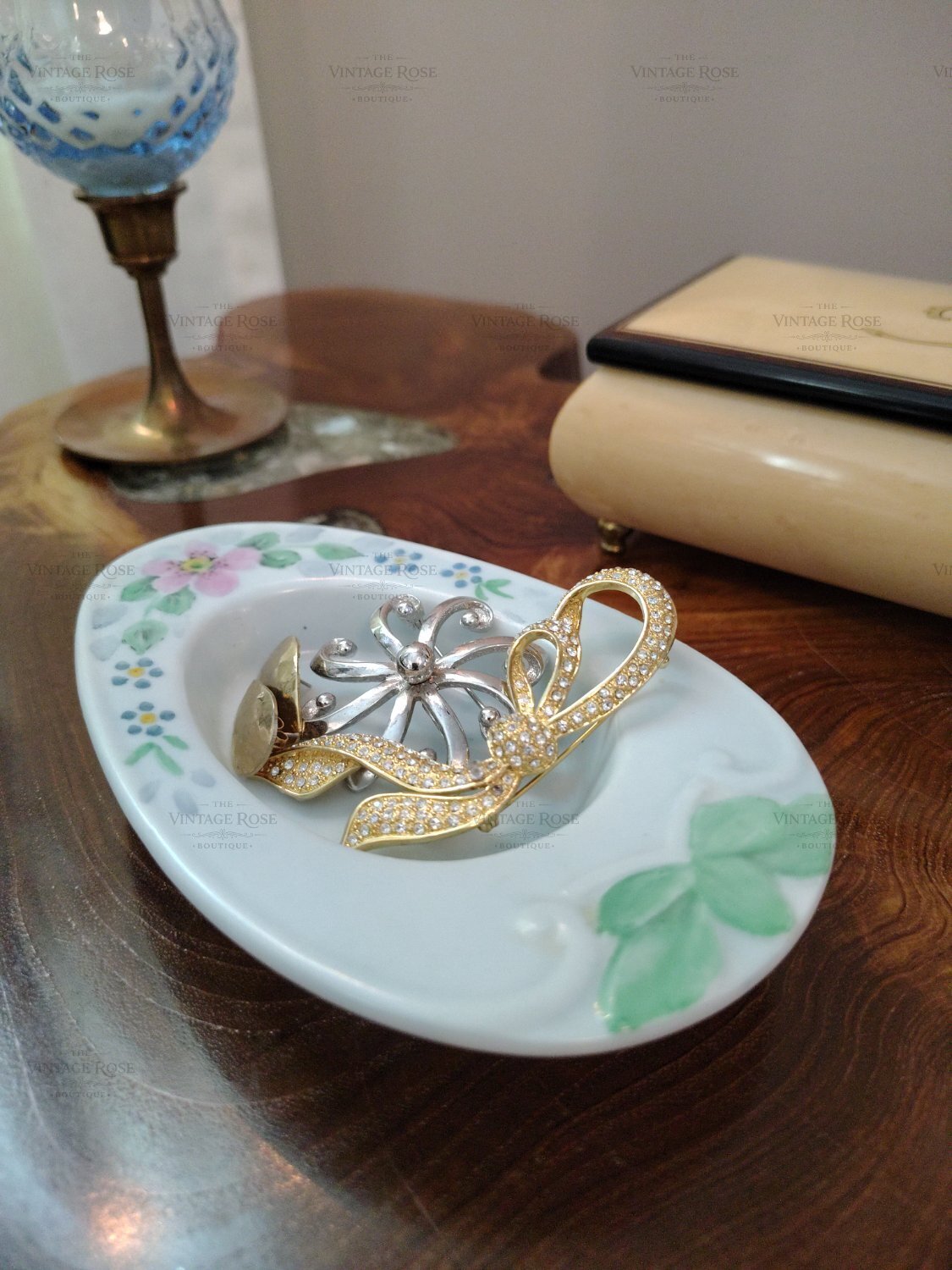
Hand-Painted Porcelain Trinket Dish — Wild Rose & Forget-Me-Nots, Signed and Dated 1969
$20.00Enamel / Painted, Porcelain / Ceramic
HDRB-VR-0004 -
Good
1990s
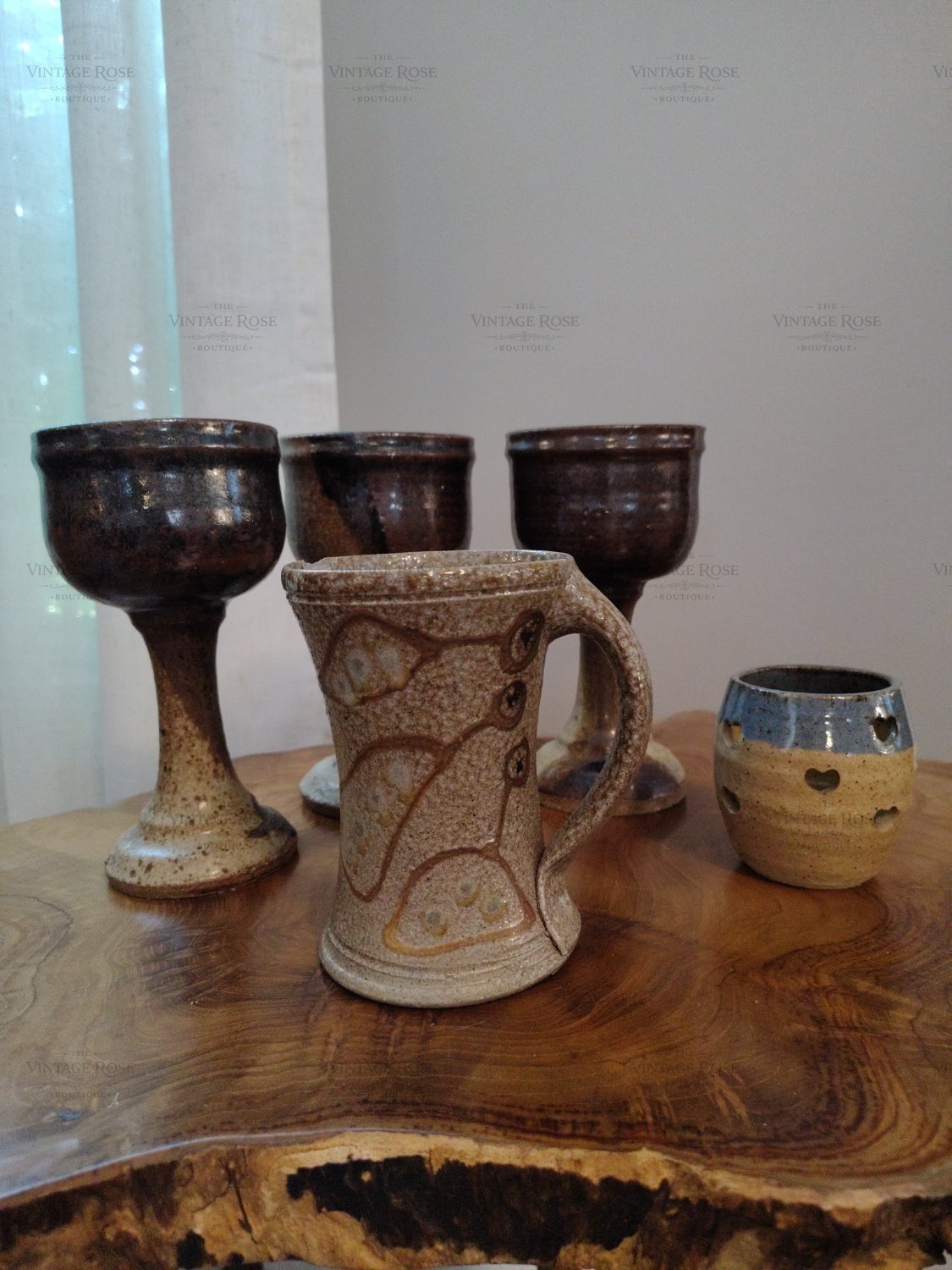
Mark Hewitt Pottery Salt-Glazed Stoneware Vase — Impressed Circular Monogram, Small Rim Chip
$85.00Stoneware
HDRP-VR-0019 -
Very Good
1960s
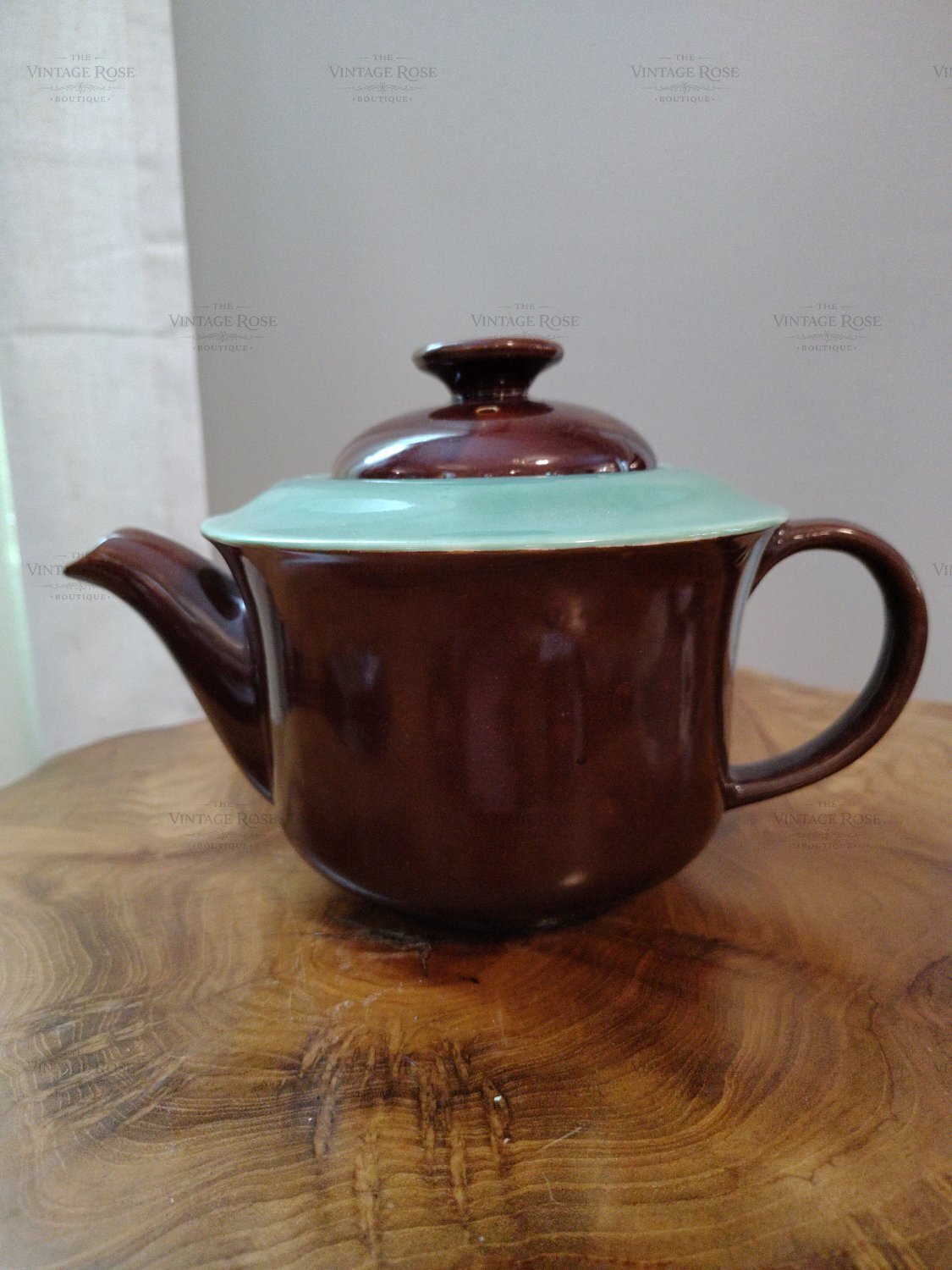
Red Wing Pottery Two-Tone Teapot — Mid-Century Brown & Aqua Turquoise Stoneware, USA
$55.00Stoneware
HDRP-VR-0014