 1 / 20
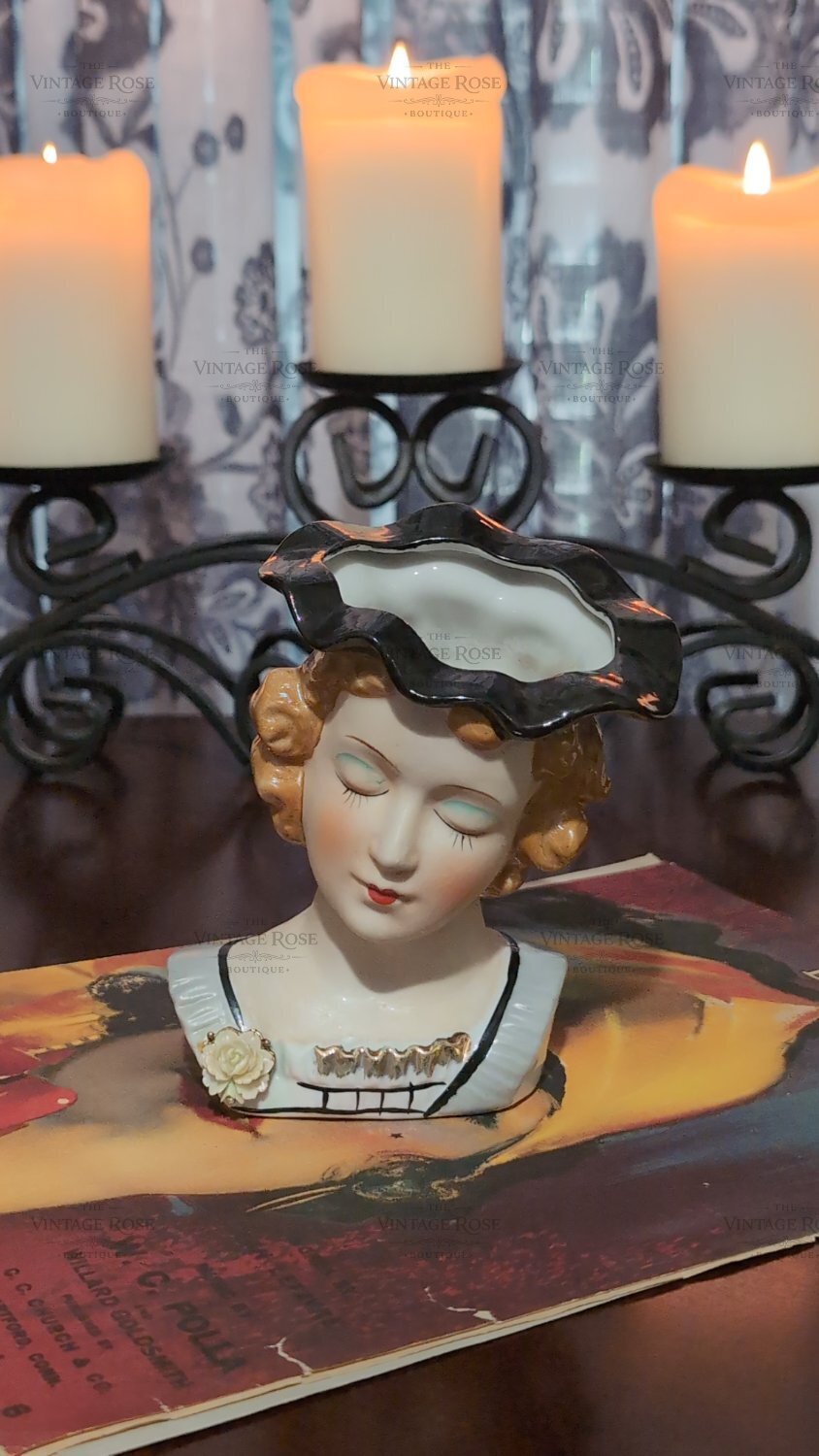
Vintage Lady Head Vase Planter — Gold Luster Ruffle Hat, Applied Rose, 1950s Made in Japan
Price in USD. Shipping is $10.95 to the contiguous US — see our Shipping Policy.
- Origin: Made in Japan (original foil sticker on base)
- Era: 1950s
- Material: Glazed ceramic with hand-painted details and gold luster
- Form: Lady head vase / planter, open at top
- Dimensions: Approximately 6″ tall × 5″ wide
- Condition: Excellent — no chips, cracks, or crazing
Vintage Lady Head Vase Planter — Gold Luster Ruffle Hat, Applied Rose, 1950s Made in Japan
1950s — Late postwar period, during the golden age of Japanese export ceramics and the peak of the American head vase craze
Mid-Century Japanese Export, Lady Head Vase
She arrived during the Eisenhower years, when florists across America were tucking tiny bouquets into ceramic head vases and customers were falling in love with the vases themselves. Made in Japan and shipped across the Pacific, she was one of thousands of head vases that found their way into American homes — but her gold luster hat and applied rose set her apart from the crowd. She still carries her original foil sticker, a small paper passport that has survived seven decades of careful ownership.
Specifications
- Dimensions
- 5 × 5 × 6 in
- Weight
- 1.5 lbs
- SKU
- HDRF-VR-0022
The One With the Hat
You know that friend who shows up to brunch and everyone else suddenly feels underdressed? That's this head vase. This lady chose a dramatically ruffled wide-brimmed hat finished in rich gold luster — and she closed her eyes because she already knows she looks fantastic. This is a 1950s Japanese export head vase with real presence. The hat is the star — a wide, undulating ruffle with a glossy black glaze and gold luster highlights that catches the light from every angle. It crowns a head of sculpted golden blonde curls, a serene face with downcast eyes, delicately painted blue-green lashes, and perfectly red lips. She's not smiling — she doesn't need to. She knows. The details below the brim are just as considered. Her bodice features a crosshatch pattern picked out in black, edged with careful black piping at the neckline and a ruffled collar. An applied ceramic rose with green leaves sits at her left shoulder — a three-dimensional flourish that lifts this piece from decorative into something approaching sculptural. The back view reveals beautifully rendered curls cascading down, and the ruffled collar treatment continues all the way around — this is a piece that was designed to be admired from every direction.The Head Vase Story
Head vases — also called head planters or headvases by collectors — were one of the most beloved phenomena of mid-century American decorating. Produced primarily in Japan during the late 1940s through the 1960s, they were imported by companies like Napco, Inarco, Lefton, and Relpo, and sold through florists, gift shops, and five-and-dime stores across the country. Florists would tuck small bouquets into them, and customers often fell more in love with the vase than the flowers. What started as clever packaging became a collecting passion that endures to this day. This piece still carries its original "Made in Japan" foil sticker on the base — a circular label in brown and gold that confirms its Japanese origin. No specific manufacturer has been identified, but the quality of the molding, the gold luster work, and the applied floral detail are consistent with the better Japanese export ceramics of the era. Pieces with gold luster trim, elaborate hats, and applied flowers represent the more upscale end of head vase production and are especially prized by collectors. Be sure to look for other vintage head vases in the shop — we're always adding to the collection.Details
- Origin: Made in Japan (original foil sticker on base, brown and gold circular label)
- Era: 1950s
- Material: Glazed ceramic with hand-painted details and gold luster trim
- Form: Lady head vase / planter (open at top)
- Design: Woman with gold luster ruffled hat, golden blonde curls, closed eyes, applied ceramic rose at shoulder
- Bodice: Crosshatch pattern with black piping and ruffled collar
- Colors: Gold, black, white, flesh tones, red (lips), blue-green (eye shadow), cream and green (applied rose)
- Dimensions: Approximately 6" tall × 5" wide
- Mark: Original circular "Made in Japan" foil sticker on base (intact)
Condition
Excellent. No chips, cracks, or crazing. The gold luster on the hat retains its rich metallic sheen, the hand-painted facial features are crisp and vibrant, and the applied rose is fully intact with no damage to the petals or leaves. Minor surface wear on the base is consistent with seven decades of careful handling — the kind of honest patina that tells you a piece has been genuinely loved, not sitting in a warehouse. The original foil sticker on the base remains intact, which is increasingly uncommon on pieces of this age. She's been well kept.Related products
-
 Excellent
Contemporary Artisan
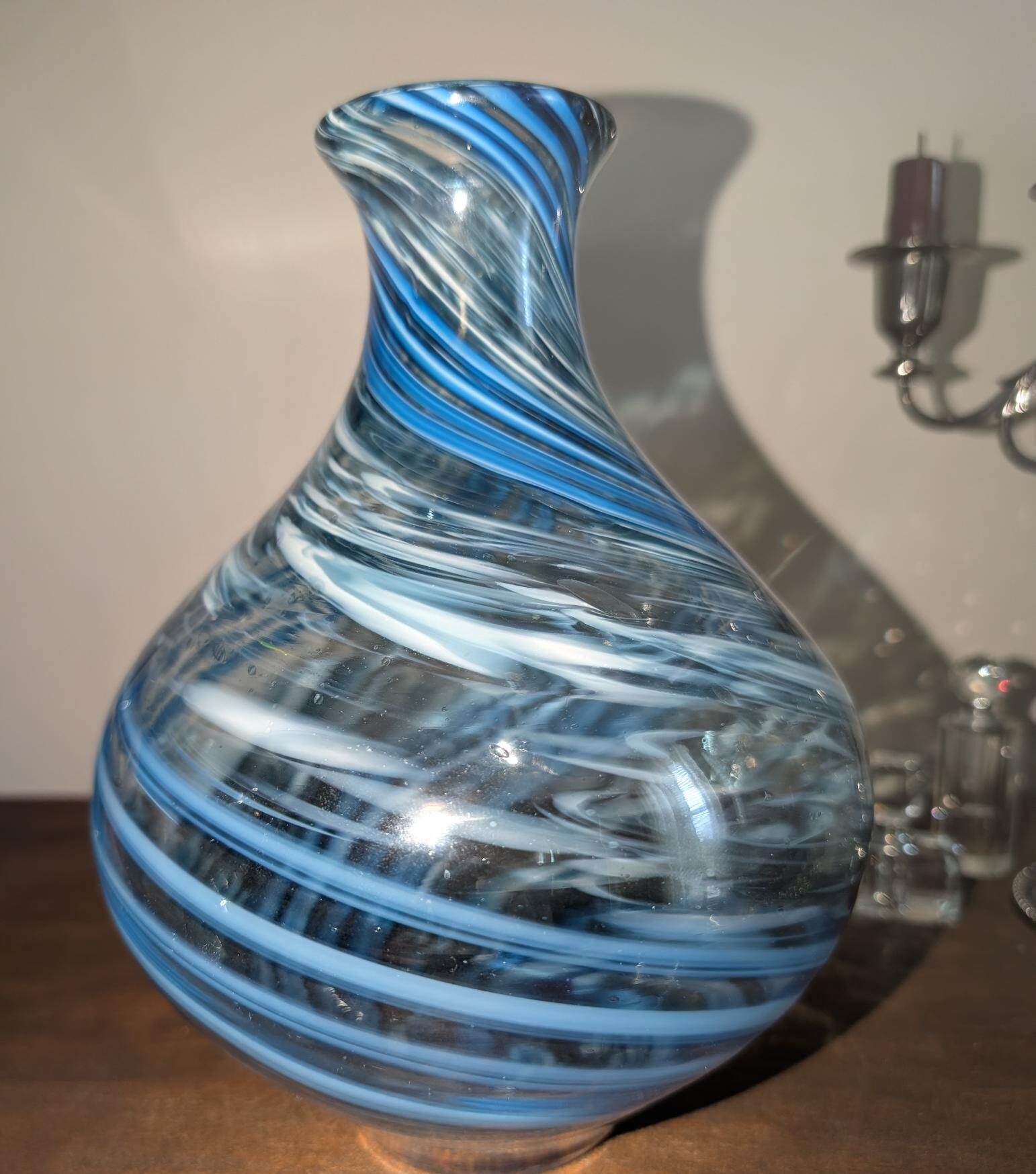
Hand-Blown Swirl Art Glass Vase — 9.5″ Ocean Blue & Teal Artisan Glass
$48.00Crystal / Glass
HDRV-VR-0006 -
Excellent
Mid-Century (1940s–1960s)
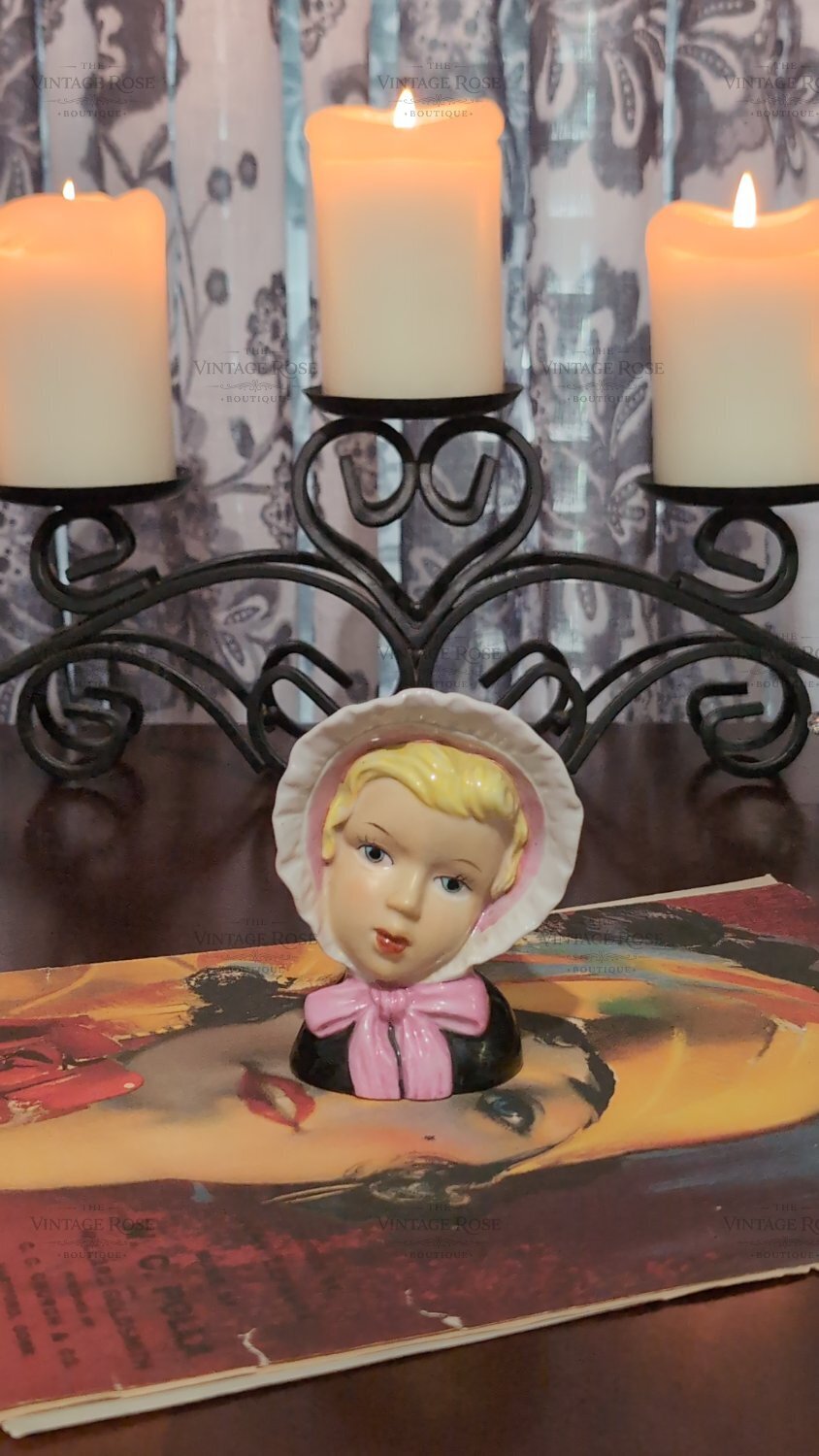
Vintage Girl Head Vase Planter — Blonde in Ruffled Bonnet with Pink Bow, 1950s Japan, Pastel Ceramic
$33.00Porcelain / Ceramic
HDRF-VR-0023 -
Excellent
Estimated Early to Mid-20th Century
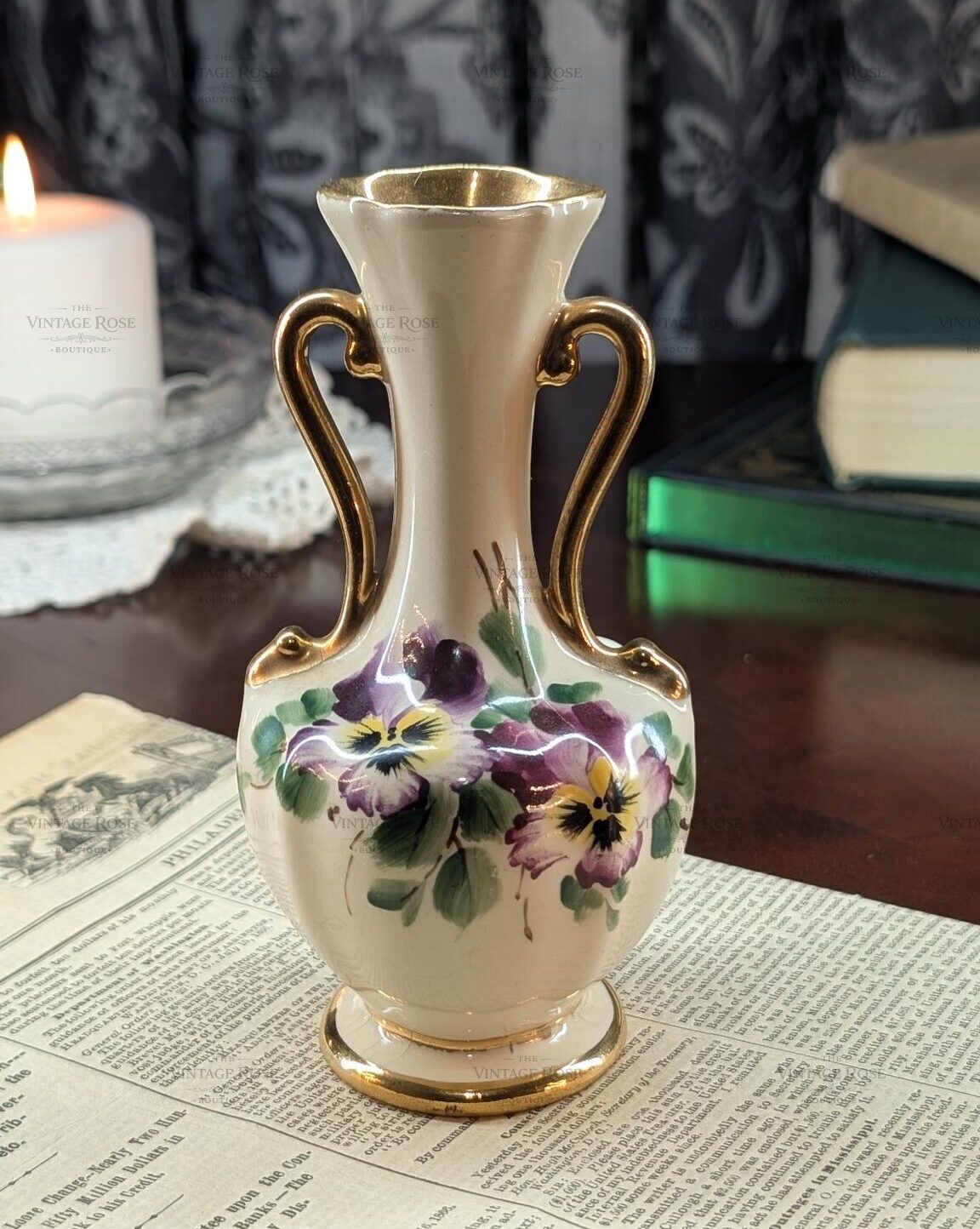
Vintage Hand-Painted Pansy Ceramic Bud Vase with Gilt Scroll Handles
$28.00Porcelain / Ceramic
HDRV-VR-0009