 1 / 4
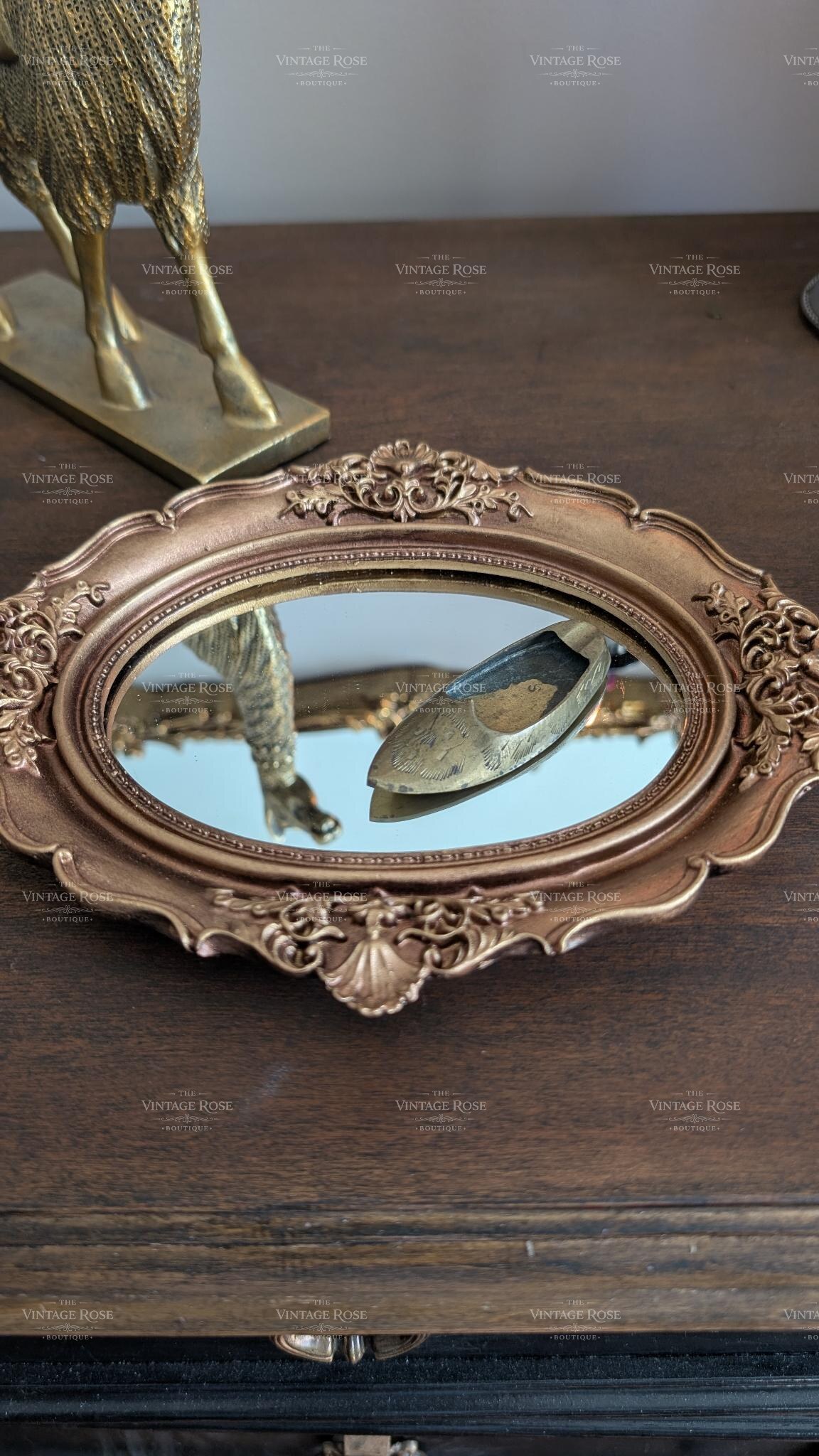
Vintage Brass Mojari Slipper — Miniature Engraved Indian Brass Ornament, Ashtray & Incense Rest
Price in USD. Shipping is $5.95 to the contiguous US — see our Shipping Policy.
Highlights
- Solid brass with hand-engraved floral design on the vamp
- Traditional pointed-toe mojari/jutti slipper form
- Open rectangular basin at the heel — originally an ashtray, perfect today as an incense rest, ring holder, or catch-all
- Stamped "INDIA ITL 17" on the underside
- Approximately 3.5″ long — a true miniature
Condition
Good vintage condition with natural aged brass patina throughout. No dents, cracks, or structural damage. The patina is even and attractive — consistent with age and entirely original.Vintage Brass Mojari Slipper — Miniature Engraved Indian Brass Ornament, Ashtray & Incense Rest
Early to Mid-20th Century
Indian Export Brassware, Novelty Decorative
Stamped "INDIA ITL 17" on the underside. This miniature brass slipper takes the form of a mojari — the traditional curved-toe, flat-soled shoe worn across South Asia for centuries, with origins in Rajasthani and Mughal leather-working traditions. Indian brass workshops, particularly those in Benares (Varanasi) and Moradabad, have produced miniature brass shoes as decorative ornaments for generations.
The form was adapted for Western export beginning in the 1920s, when smoking culture created demand for novelty ashtrays. Artisans added a shallow open basin at the heel, transforming the ornamental slipper into a functional piece for the British and American souvenir trade. These became one of the most recognizable Indian export items of the twentieth century, produced continuously from the 1920s through the 1970s.
The hand-engraved floral design on the vamp is executed in the traditional Benares style — fine lines incised into brass with a hand-held burin, a technique passed down through family workshops over generations. Each piece varies slightly, as handwork always does. Today these miniatures have outlived their ashtray function and serve as incense rests, ring holders, trinket dishes, or simply as small works of craft that connect a modern shelf to a very old tradition.
Specifications
- Dimensions
- 3.5 × 1.5 × 1 in
- Weight
- 0.5 lbs
- SKU
- HDRH-VR-0004
A Little Shoe with a Long History
This tiny brass slipper sits in the palm of your hand at just three and a half inches long — but its story stretches back much further than its size suggests. The form is a mojari, the traditional curved-toe, flat-soled slipper worn across South Asia for centuries, with roots in Rajasthani and Mughal craftsmanship. Indian brass workshops in Benares, Moradabad, and other centers have been producing miniature brass shoes like this one as decorative ornaments and novelty pieces for generations — long before anyone thought to rest a cigarette in one. The pointed toe curves gently upward, and the vamp is decorated with a hand-engraved floral or peacock-feather design, its fine lines radiating outward with the kind of detail that only comes from handwork.Ornament, Ashtray, Incense Rest
The open basin at the heel tells the story of how this form evolved. In Indian homes, small brass vessels have always served many purposes — holding incense, small offerings, or trinkets. When Western smoking culture exploded in the 1920s, Indian artisans adapted the miniature slipper by adding a shallow tray, creating a novelty ashtray perfectly suited for export to Britain, America, and beyond. These became one of the most recognizable Indian souvenir items of the twentieth century, produced widely from the 1920s through the 1970s. Today, this little shoe has outlived the era that gave it its ashtray function. It's a ring dish on a nightstand, a place for stray earrings on a vanity, an incense rest on a bookshelf, or simply a small brass curiosity that catches the eye and starts a conversation. The form endures because it was always more than just an ashtray — it was a miniature work of craft. This particular piece wears a lovely, honest patina — unpolished, warm, and entirely original. It has the weight and character of solid brass that's lived a few decades, and it's all the better for it.Details
- Material: Solid brass
- Form: Traditional pointed-toe mojari slipper
- Decoration: Hand-engraved floral/radiating design on vamp
- Dimensions: Approximately 3.5″ long
- Origin: India (stamped "INDIA ITL 17" on underside)
- Era: Likely early-to-mid 20th century
- Use: Decorative ornament, novelty ashtray, incense rest, or trinket dish
Condition
Good vintage condition. The brass has a natural aged patina throughout — warm and even, with no polishing or lacquer. No dents, cracks, bends, or structural damage. The engraving is crisp and well-preserved. This piece presents exactly as a well-kept vintage brass collectible should.Related products
-
 Very Good
Contemporary
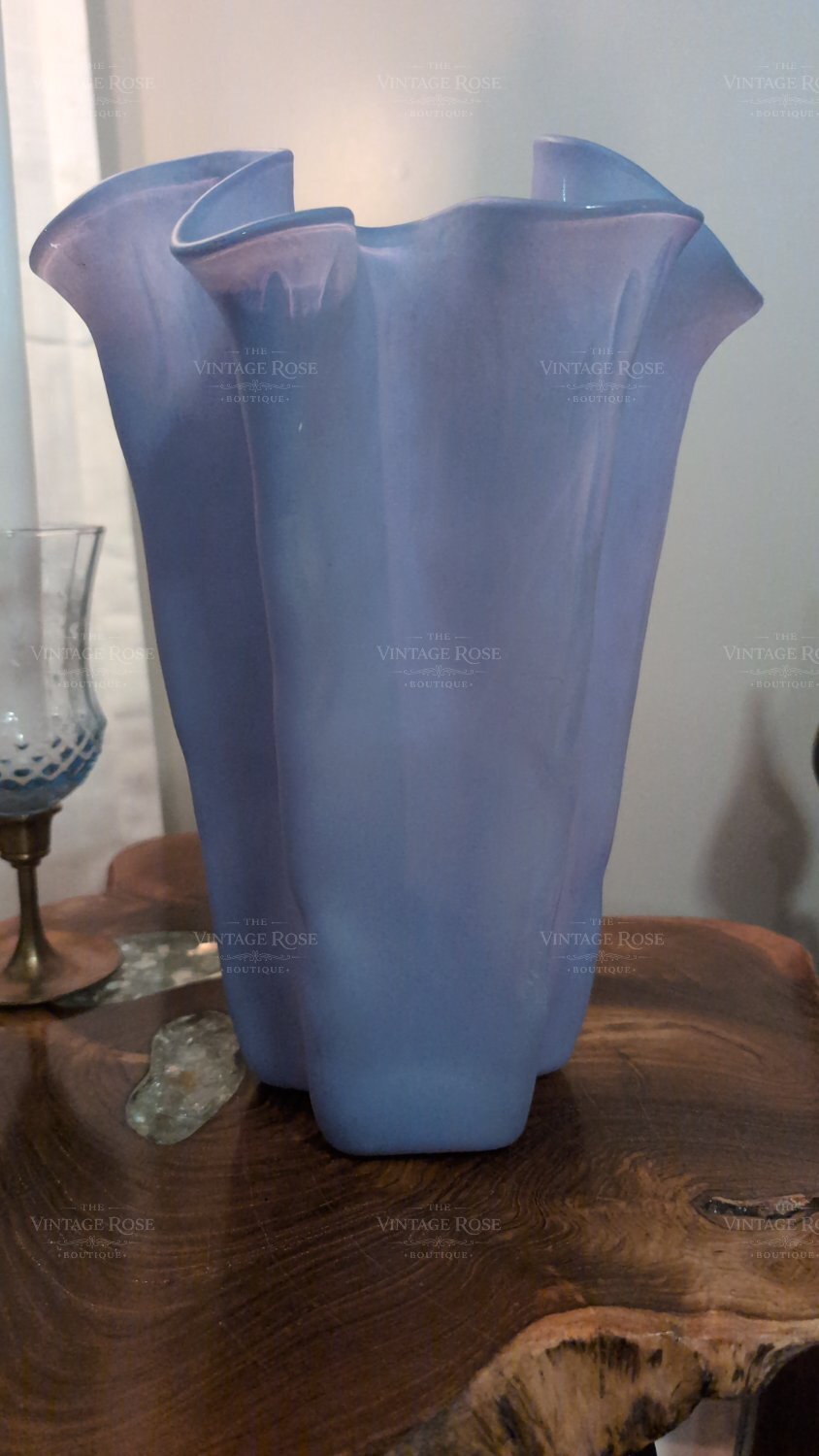
Muurla Finland Handkerchief Art Glass Vase — 12″ Mouth-Blown Satin Periwinkle-to-Lavender Ruffled Vase
$105.00Art Glass, Glass
HDRV-VR-0027 -
Excellent
1970s
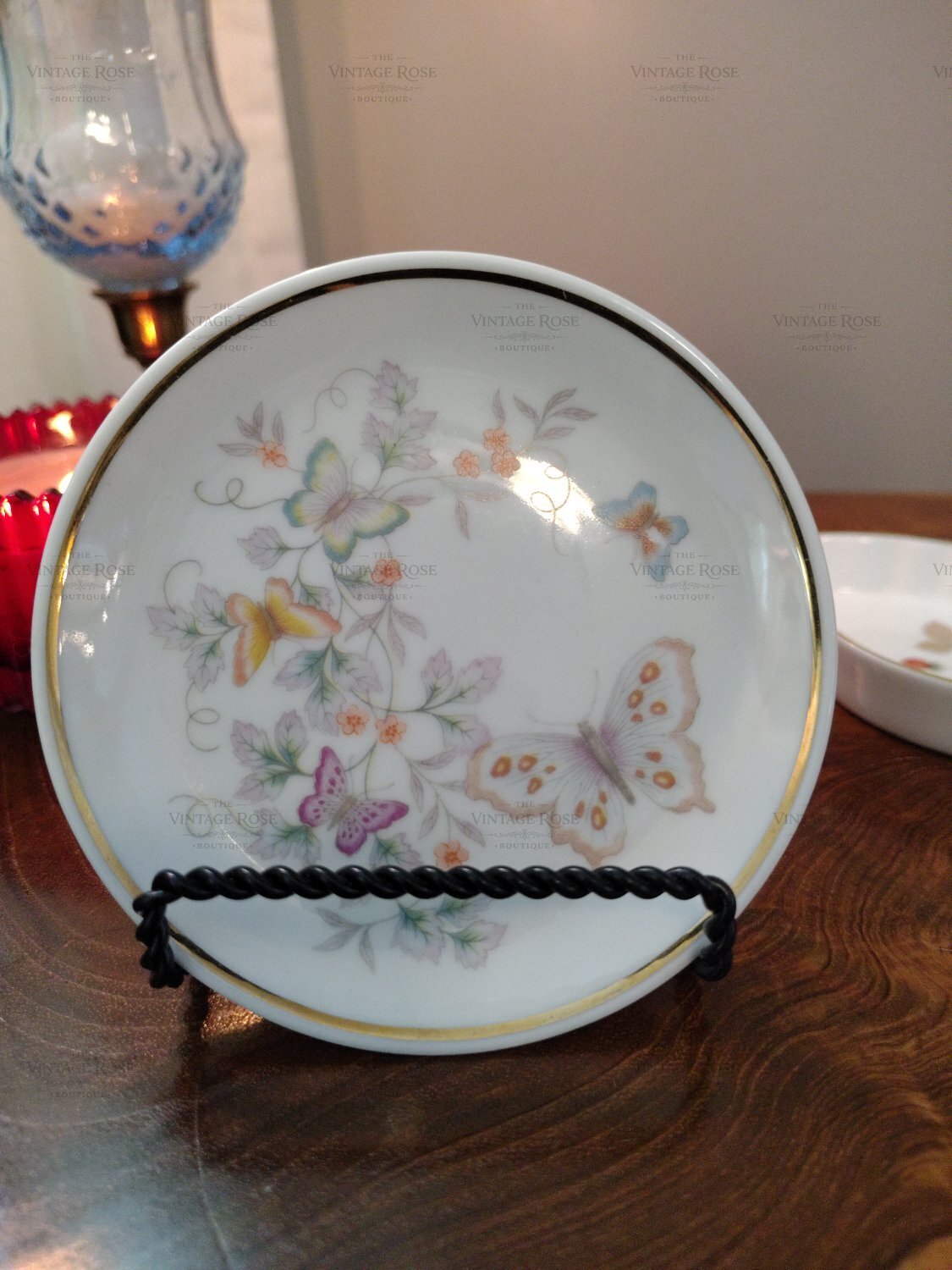
1979 Avon “Butterfly Fantasy” Fine Porcelain Trinket Dish — Hand-Decorated, 22K Gold Rim
$14.00Gilt, Porcelain / Ceramic
HDRB-VR-0007 -
Very Good
Early 20th Century (c. 1900s–1940s)
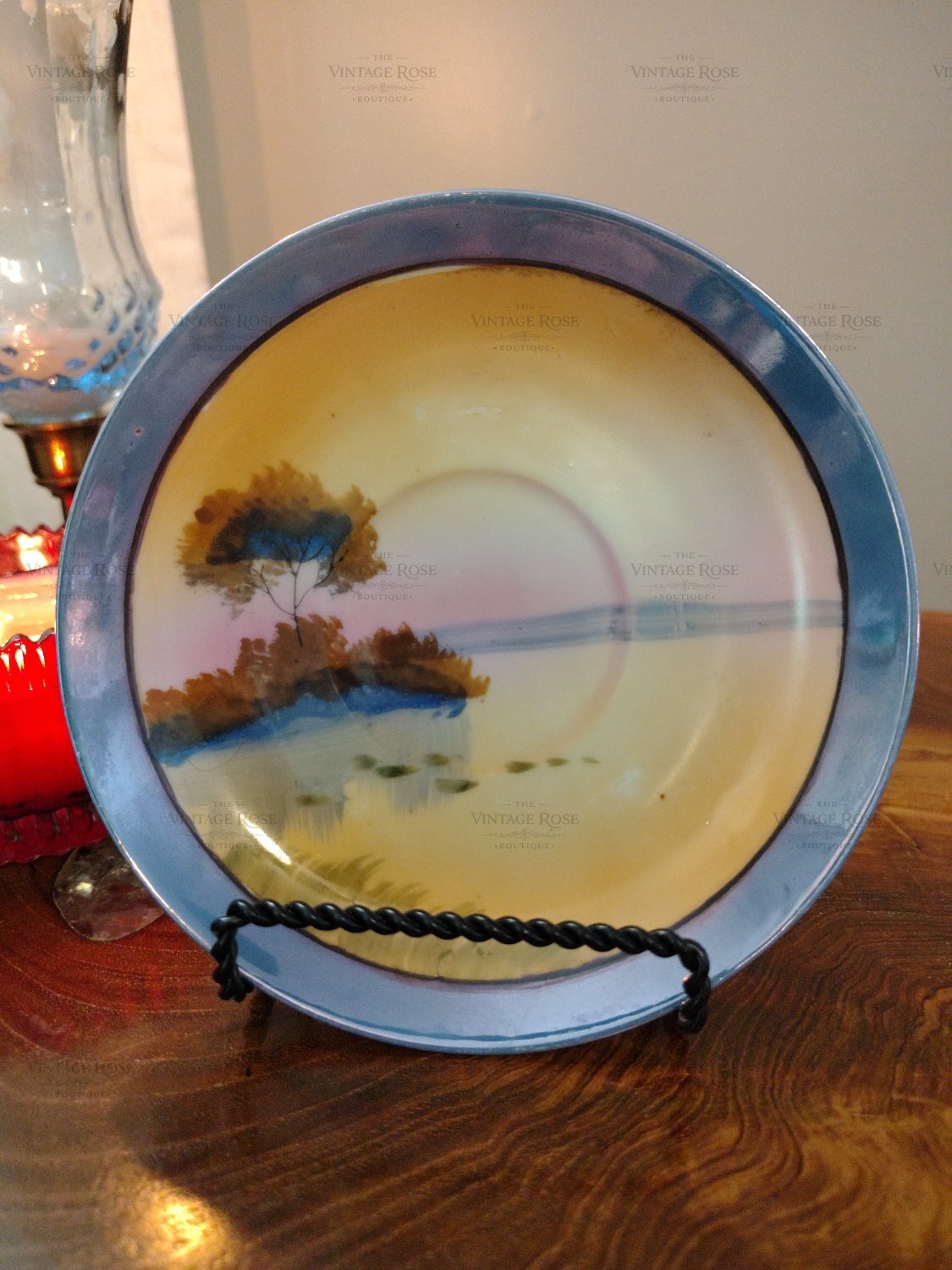
Vintage Blue Lustreware 6″ Plate — Hand-Painted Japanese Scenic Landscape, Lakeside at Sunset
$22.00Porcelain / Ceramic
HDRH-VR-0022